


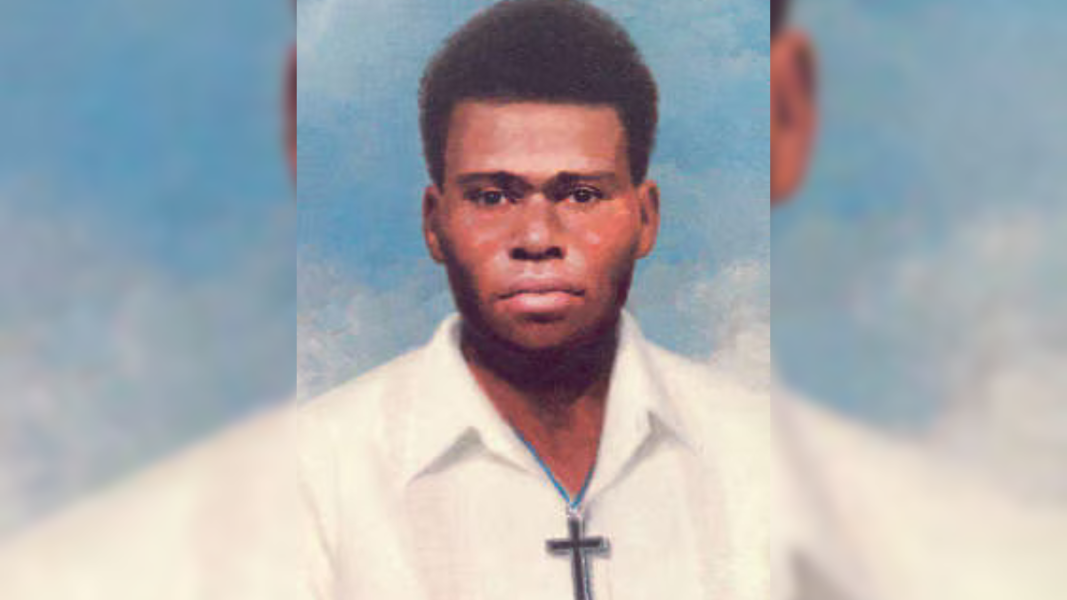
Peter To Rot was born in 1912 in the village of Rakunai, on the island of New Britain, Papua New Guinea. He grew up in a deeply Catholic family, where faith was the center of daily life. His parents passed on to their children prayer, fidelity to the Gospel, and the importance of service to others.
From a young age, Peter stood out for his simplicity, his serene character, and his love for God. At 18 years old, he entered the St. Paul’s College in Taliligap, an institution dedicated to training lay catechists, called to be pillars of evangelization in a land still young in faith. There he received theological, spiritual, and pastoral formation that would mark his entire life.
Catechist, husband, and father
In 1933, when he was just 21 years old, he was sent as a catechist to his own village, Rakunai. His mission consisted of teaching the faith, guiding in prayer, and sustaining the Christian life of the community. The faithful appreciated him for his dedication, his joy, and his ability to approach everyone with humility and patience.
On November 11, 1936, he married Paula Ia Varpit, with whom he formed an exemplary Christian home. Together they had three children, whom they raised in the faith. Their family life became a living testimony to the beauty of Christian marriage, based on fidelity and love.
The challenge of the Japanese occupation
In January 1942, the history of the island took a dramatic turn: the Japanese army occupied New Britain and imprisoned the European missionaries. Peter, who until then had been a collaborator of the priests, suddenly found himself with the mission of sustaining the life of the Catholic community alone.
For a time, the authorities allowed some freedom, but in March 1944 they prohibited all religious activity. For the faithful, this prohibition was a devastating blow, but Peter did not let himself be defeated. Aware of the risk, he built an underground shelter where he continued to gather Christians to pray and celebrate the permitted sacraments.
At the same time, the occupiers promoted polygamy as a strategy to win over the local chiefs, in open defiance of the Church’s teaching. Peter To Rot, with courage and conviction, publicly defended the dignity of Christian marriage, which is monogamous and indissoluble. That defense earned him the hostility of the Japanese authorities, who marked him as an enemy.
Prison and martyrdom
In the spring of 1945, he was arrested and sentenced to two months in prison. For him, that prison was not a reason for despair, but for serenity and spiritual joy. During a visit, his sister found him firm in the faith, and he comforted her with these words:
“Don’t cry. I’m here for a good cause. I’m very happy, because I’m here for my faith”.
Shortly before his sentence ended, on a Friday in July 1945, Peter was murdered by a lethal injection. He died young, at just 33 years old, but left behind an indelible mark. His testimony showed that a lay catechist, husband, and father can live the faith to the extreme of giving his life for Christ.
Recognition by the Church
The memory of Peter To Rot became a seed of faith for Papua New Guinea and for the entire Church. His testimony of fidelity to the Gospel and defense of Christian marriage was solemnly recognized when Pope St. John Paul II beatified him on January 17, 1995, in Port Moresby, the capital of Papua New Guinea.
Today, in a world that also faces challenges to the family and to the faith, the figure of this humble catechist shines even brighter. On October 19, 2025, Leo XIV will canonize him, raising him to the altars as a saint of the universal Church, an example of fidelity, love, and Christian courage.