


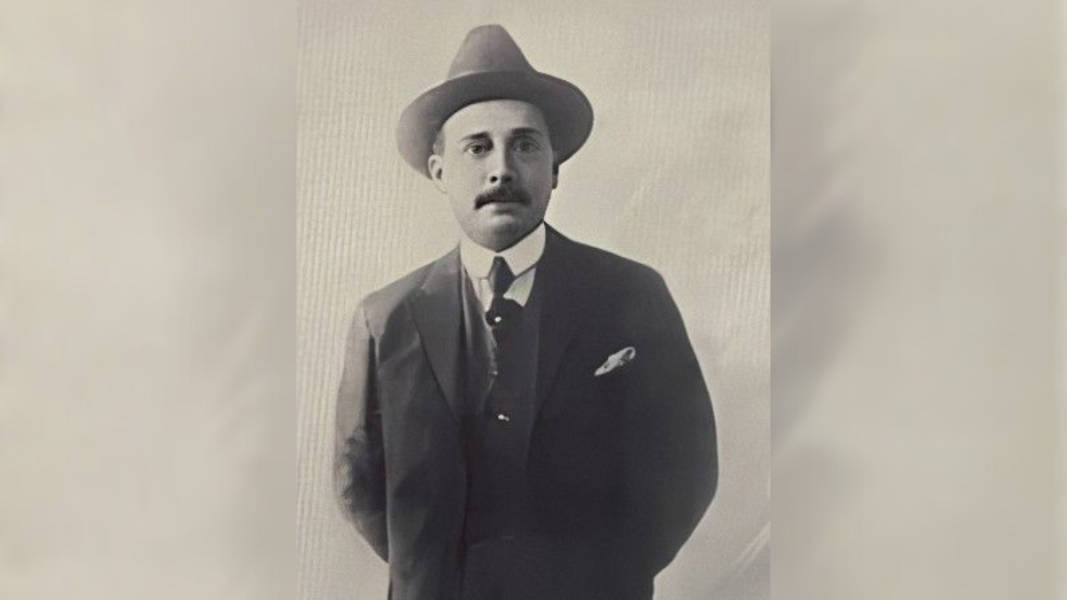
José Gregorio Hernández Cisneros was born on October 26, 1864 in Isnotú, a small town in Venezuela. From a very young age, he showed great intelligence and a spirit of service, virtues that would accompany him throughout his life.
Encouraged by his father, he entered the Faculty of Medicine at the University of Caracas, where in 1888 he successfully defended his doctoral thesis. The following year, thanks to his brilliant performance, he was sent to Paris to further his studies.
Master and Pioneer of Medicine in Venezuela
Upon returning to his homeland, at just 27 years old, he founded the chairs of histology, physiology, and bacteriology, thus opening a new chapter in the teaching of Venezuelan medicine. He was a close teacher: he did not hesitate to invite the poorest students to his home to teach them personally.
He established the College of Physicians of Venezuela and participated as a founder of the National Academy of Medicine. In addition to his teaching work, he continued to deepen scientific research, leaving valuable contributions in fields such as embryology and histology.
Search for God and Spiritual Vocation
José Gregorio’s heart beat not only for science, but also for God. In 1908, he entered the Charterhouse of Farneta in Lucca (Italy), desiring to consecrate himself completely to the Lord. However, his fragile health forced him to return to Venezuela.
Years later, he tried again at the Pío Latin American College in Rome, but once again physical difficulties frustrated his project. He then understood that his path to holiness did not lie in monastic life, but in exercising his vocation as a doctor as a true apostolate of charity.
The Doctor of the Poor
Silent, prudent, and deeply charitable, José Gregorio dedicated himself to the sick without expecting anything in return. He attended to the most needy for free, to whom he not only gave consultations, but also medicines and even money for their basic needs.
He always exhorted his patients to trust in God and to frequent the sacraments, especially the Eucharist. During the terrible Spanish flu epidemic in 1918, he tirelessly dedicated himself to attending to the sick in Caracas, being for all a doctor and an apostle.
Death and Offering of Life
On June 29, 1919, after having bought medicines for a sick child, he was run over by a car in Caracas. He died almost instantly, invoking the Blessed Virgin Mary.
A few months earlier, he had confided to a friend a secret that today resonates like a prophecy:
“I’m going to confide something to you: I have offered my life as an offering to God for the peace of the world!”.
Recognition by the Church
His memory was deeply engraved in the heart of the Venezuelan people, who still call him with devotion “the doctor of the poor”. Pope Francis beatified him on April 30, 2021, recognizing in him a model of a layperson who knew how to unite science, faith, and charity.
On October 19, 2025, Pope Leo XIV will canonize him, officially confirming José Gregorio Hernández as an intercessor saint, doctor of body and soul.