


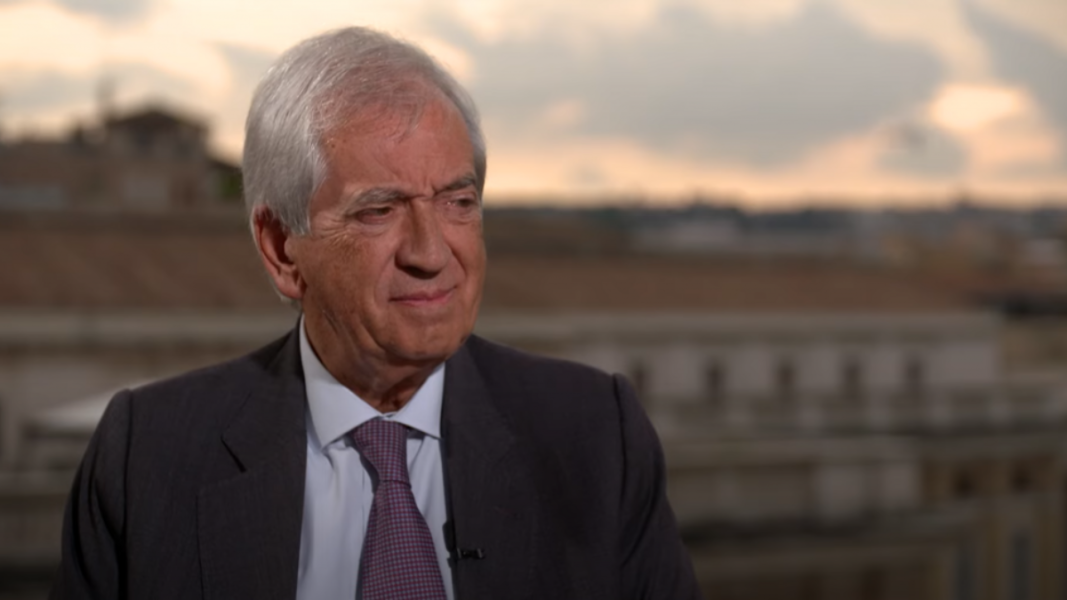
Libero Milone, the Vatican’s first auditor general, has decided not to give up in the long legal battle he has been dragging since his abrupt resignation in 2017. After his wrongful dismissal lawsuit was rejected in 2024, with the obligation to pay 113,000 euros in costs, and after the appeal also failed last July, the former auditor has now taken his case to the Court of Cassation, the highest judicial instance in Vatican City.
Milone maintains that his departure was not an isolated or personal matter, but part of a much broader movement to halt any attempt at financial cleanup in the Holy See.
A dismissal surrounded by accusations and suspicions
Milone’s legal claim amounts to 9.3 million euros. The former auditor alleges that both he and his deputy, Ferruccio Panicco—deceased after years of legal struggle—were forced to resign after discovering serious financial irregularities in Vatican finances.
The Holy See then defended that Milone had acted as a «spy,» claiming to have irrefutable evidence. However, that evidence has never been presented. An internal document that would officially explain the reasons for his expulsion has also not been shown to Milone or his team. «The Vatican did not understand that I was only auditing,» the former auditor recalled, quoting words from Cardinal George Pell, who was also sidelined at that same time.
Becciu and Giani, pointed out but not prosecuted
The core of the legal confrontation centers on whom Milone should have directed his lawsuit. Vatican judges maintain that it should have been filed against the then-substitute of the Secretariat of State, Cardinal Angelo Becciu, and against Domenico Giani, head of the Vatican Gendarmerie, both responsible for the raid that precipitated his resignation.
Milone, however, considers it nonsense. He claims it was not a personal decision by those men, but an institutional order. Becciu, he says, acted under the power inherent in his position. In addition, his lawyers remind that the legislation applicable to the Vatican requires directing claims against the Secretariat of State as the employing body, and not against specific individuals.
A process marked by obstacles and silences
The former auditor denounces that during the process, judicial decisions have been made that prevented him from defending himself fully. The judges went so far as to demand the removal of twenty pages from his defense that described the auditing work carried out, arguing that they were «offensive» to the high Vatican leadership. The appearance of witnesses who could have supported his version was also prohibited.
«It is absurd to force a plaintiff to withdraw the evidence that justifies his accusation,» Milone pointed out, describing the situation as scandalous. In his view, a court cannot become a wall of protection for the high spheres, but should be an example of transparency and justice.
The echo of Cardinal Pell and a closed system
The former auditor does not hesitate to compare his case with that of Cardinal George Pell, the Australian prelate who was also removed from his financial reform mission. Both, he recalls, were displaced almost at the same time, which he interprets as part of a system designed to shield privileges and maintain opacity: an «Orwellian system of power protection within the Vatican.»
Milone states that his motivation is not only to clear his name, but to complete the task he assumed as the first auditor general of the Holy See, a job he considers an ethical duty to Catholic faithful. He also warns that until his case is resolved, it will be impossible to attract an independent and competent auditor: no serious professional will want to risk their reputation in such a hostile and guarantee-lacking environment.
The battle continues
Despite all the setbacks, Milone does not give up hope that justice will be done. He has also requested a private audience with Pope Leo XIV to explain the situation to him personally and warn him about the serious financial crisis that, according to him, persists in the Vatican beyond the official messages of tranquility.
«I firmly believe that the justice system must be respected, even when it seems to deviate. That is why it is essential to complete the entire process,» he declared. His determination points to the fact that, whatever the ruling of the Vatican Supreme Court, his fight is far from over.
Source: National Catholic Register