


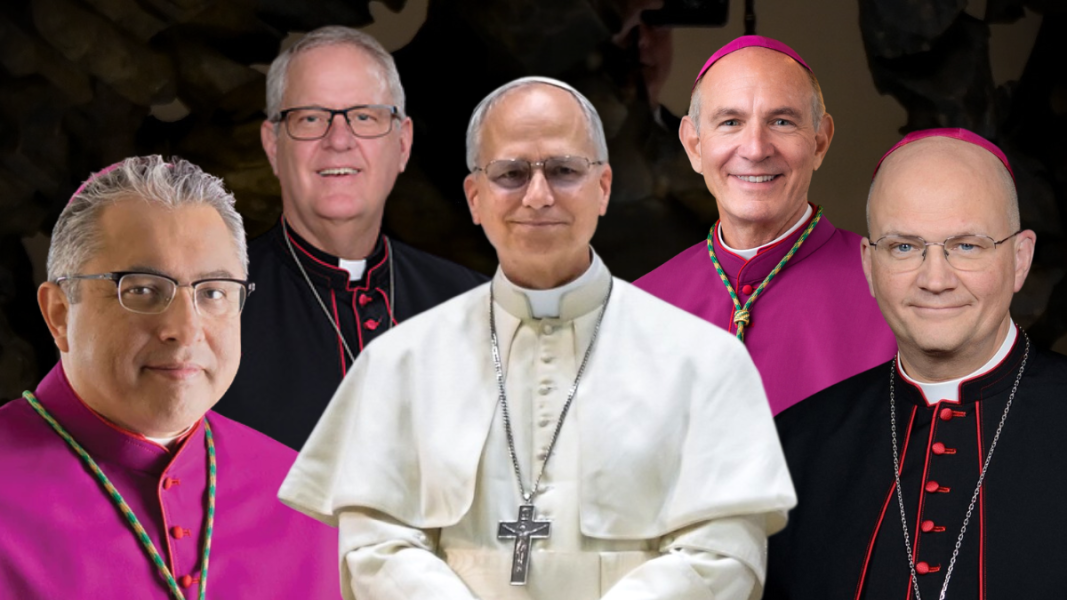
In the first months of the pontificate of Leo XIV, the outlines of a liturgical policy begin to take shape that, without declaring it openly, seems to want to redirect traditional practice towards a more “homogeneous” form of worship. The Pope maintains Latin, traditional vestments, and solemnity, but everything indicates that the preferred normative framework will be the Missal of 2002, that is, the Novus Ordo celebrated in Latin. In parallel, the Missal of 1962, the secular form of the Roman Rite, is being progressively restricted or directly suppressed in various dioceses.
The American analyst Taylor Marshall has warned of this trend, pointing out a pattern that does not seem accidental: the restrictions do not come from veteran bishops or from dioceses traditionally reluctant to the Vetus Ordo, but from a new generation of prelates appointed during the tenure of Cardinal Robert Prevost at the head of the Dicastery for Bishops (since 2023). And it is precisely among these recent appointments—in the United States, where Prevost has had special influence—where the most visible offensive against the traditional Mass has begun.
The examples are eloquent. In Knoxville (Tennessee), Bishop Beckman, installed in July 2024, announced the transition from the 1962 Mass to the 2002 one in Latin in the name of “ecclesial unity.” In Charlotte (North Carolina), Bishop Martin, ordained just two months earlier, adopted the same pastoral discourse and suppressed stable groups of the ancient rite. In Austin (Texas), the new Bishop García, installed in September 2025, repeated the formula almost to the letter: he first suppressed the traditional Mass in his previous diocese of Monterey (California) and, upon arriving in Texas, did so again within weeks. Even in Detroit (Michigan), under the also recently arrived Weisenburger (March 2025), similar measures have been taken.
All of them share the same profile: young bishops, appointed under Prevost’s management, trained in a new generation episcopal environment, and with a common discourse that equates “unity” with ritual uniformity. The documents accompanying these decisions usually repeat the same structure: acknowledgment of the “richness of tradition,” promise to maintain Latin and reverence, and then the substitution of the 1962 Missal for the 2002 one “with all the traditional options permitted by its rubrics.” It is, in short, an operation of liturgical replacement wrapped in language of communion.
Marshall summarizes this phenomenon with the expression “corral theory”, a sort of “corral theory.” According to this view, Rome would have decided to allow the faithful attached to traditional liturgy to concentrate in an increasingly reduced space: specific institutes like the FSSP or the Institute of Christ the King, while ordinary diocesan parishes would be reserved for the Novus Ordo, although dressed in Latin and solemnity. The goal would be to contain, not dialogue; channel, not accompany. The result is that, little by little, the traditional Mass ceases to be a living option within the ordinary structure of the Church and becomes a “marginal indult,” a controlled ghetto.
The official discourse, however, avoids speaking of suppression. It invokes “unity,” denounces “polarization,” and promises that the “treasures of tradition” will be preserved. But in practice, the message to the faithful is clear: those who desire Latin will have it in the Novus Ordo; those who insist on the 1962 are outside the path of unity. In the new semantic framework, fidelity to a millennial liturgical form translates into disobedience, and obedience consists in accepting the reformed version as the only legitimate one.
The paradox is evident. The communities that today lose their traditional Masses are usually the most vibrant: large families, young practitioners, priestly and religious vocations, high Sunday participation. They are nuclei of fervent faith and doctrinal fidelity. And yet, they are presented as a pastoral problem or a focus of division. Meanwhile, dioceses abound where ecclesial communion is confused with liturgical experimentation and moral relativism, without anyone speaking of “unity.”
Behind all this, a change of strategy is taking shape. If the pontificate of Benedict XVI bet on the peaceful coexistence of the two forms of the Roman Rite—the “mutual enrichment” of Summorum Pontificum—, the new course seems to point towards a de facto uniformity, with Latin permitted but under control, and a single recognized liturgical expression: the post-conciliar reform. It is not a frontal attack, but a progressive, discreet, and bureaucratic displacement, executed diocese by diocese by bishops who share the same roadmap.
Perhaps the key word of the moment is precisely “unity.” But a unity understood as uniformity is not communion, but discipline. And a discipline that marginalizes what for centuries has been a source of holiness and vocations does not strengthen the Church, but impoverishes it. The danger is not Latin—which Pope Leo XIV himself values—but that Latin becomes an empty ornament, stripped of the soul that sustained it: traditional liturgy.
For this reason, beyond sympathies or styles, the current debate is not between “old” and “modern,” but between a Church that integrates its heritage and one that manages it.