


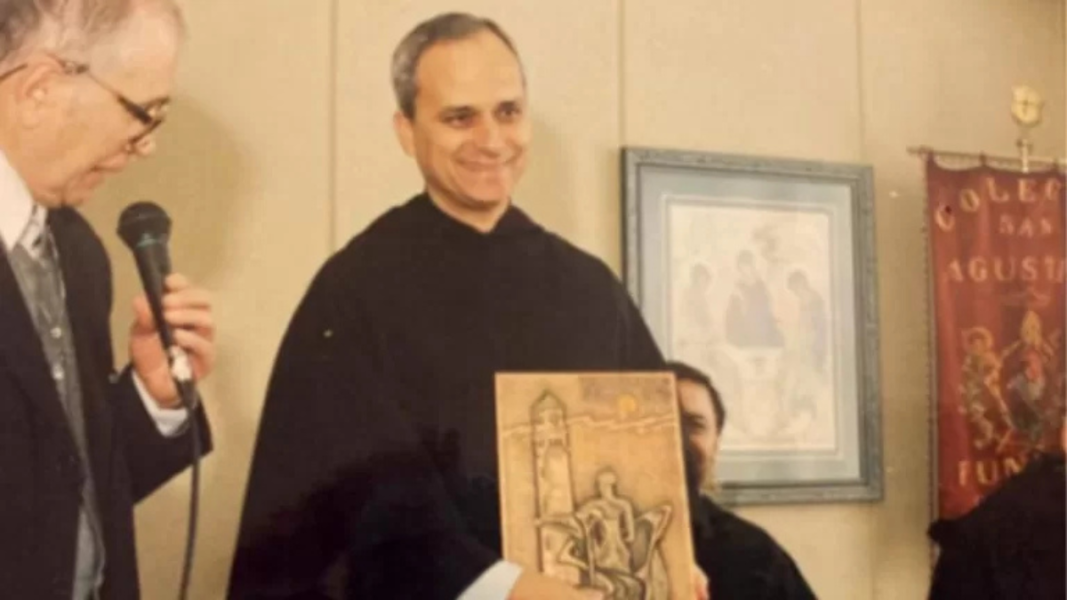
The Vatican Publishing House has announced the upcoming publication of a book containing writings and meditations by Pope Leo XIV, corresponding to the years when he served as Superior General of the Order of St. Augustine, from 2001 to 2013. The volume, titled in Italian “Liberi sotto la grazia. Scritti e meditazioni 2001-2013” (“Free under grace. Writings and meditations 2001-2013”), will be released in the spring of 2026.
It is a compilation of homilies, speeches, and spiritual reflections signed as “Robert Francis Prevost O.S.A. – Leone XIV”, which until now remained unpublished and were written during more than a decade of service at the helm of the Augustinian order. The news is striking, as until now only his doctoral thesis was known as an academically published work, and there were no records of other theological writings of his prior to his papal election in May 2025.
An unusual case
The publication of a theological book with texts prior to the papal election is an uncommon occurrence. Typically, a pontiff’s previous writings remain in the background, as part of his personal trajectory, without receiving official dissemination from the Vatican once elected successor of Peter. That is why this announcement arouses special attention: it involves officializing from the Vatican texts that correspond to the life and thought of Leo XIV before his pontificate.
The temptation of papolatry
While it is legitimate and valuable to know the intellectual and spiritual path a Pope traveled before his election, it is advisable to remember that these writings do not possess magisterial value. They are reflections of a religious in the exercise of his leadership in the Order of St. Augustine, not pontifical documents.
The risk lies in granting them undue doctrinal weight. When the Church begins to elevate a pontiff’s personal notes prior to his election to the category of “reference,” there is a danger of falling into papolatry: turning everything a Pope says or has said on matters of faith into something authoritative, even when it is not. The Petrine ministry has a well-defined scope, and its magisterial acts are delimited by the Church’s law and tradition. Confusing personal writings with official teaching not only obscures that distinction but also feeds a distorted vision of the papacy.