


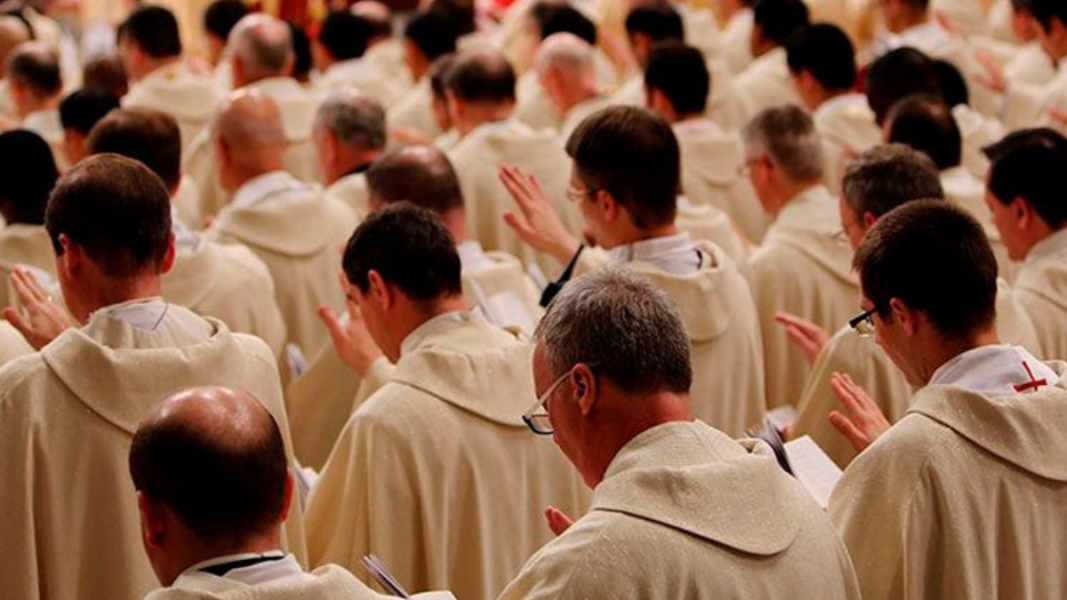
A new report prepared by The Catholic Project at the Catholic University of America and covered by The Pillar has highlighted a reality that currently marks the US clergy: there is a clear generational divide. Young priests tend to define themselves as more “orthodox” and focused on tradition, while older ones show greater affinity for progressive stances, both theological and pastoral.
The study, based on more than 1,100 surveys conducted by Gallup in 2025, portrays a Church where the way of understanding the priestly mission varies deeply according to the age of the priest.
Young priests define themselves as orthodox
One of the most notable findings is that more than 70% of priests ordained after 2010 identify as “conservative/orthodox” or “very conservative/orthodox.” In contrast, among those ordained before 1975, the majority recognize themselves as progressive.
This data reflects a generational reversal: while the decades following the Second Vatican Council produced clergy marked by adaptation to the modern world, the new generations, born already in a context of radical secularization, seem to seek in fidelity to doctrine and in the liturgy the foundation of their priestly identity.
Young priests show less interest in issues such as immigration, climate change, or the role of women in the Church, and greater concern for the centrality of the Eucharist and the recovery of the Traditional Mass.
Synodality and women, issues that divide
The report also shows clear divisions regarding ecclesial priorities. Only 29% of priests ordained this century consider synodality important, compared to 77% of those ordained before 1980. Similarly, while more than two-thirds of older priests say they are “very concerned” about the role of women in the Church, only one in five young priests shares that concern.
These data indicate that the young generation does not see the progressive agenda as a priority, but rather as a distraction from what they consider essential: the proclamation of the Gospel and sacramental life.
The price of vocation: loneliness and overload
However, the study also reveals the other side of the current priesthood. A significant number of young priests acknowledge feeling exhausted, alone, and overloaded with responsibilities that exceed their priestly vocation. Nearly half say they are asked to perform tasks that do not correspond to their ministry.
The crisis of vocations and the aging of the clergy mean that new generations carry multiple parishes, administrative functions, and pastoral work that often take them away from their central mission: to be mediators of the sacred and custodians of the Eucharist.