


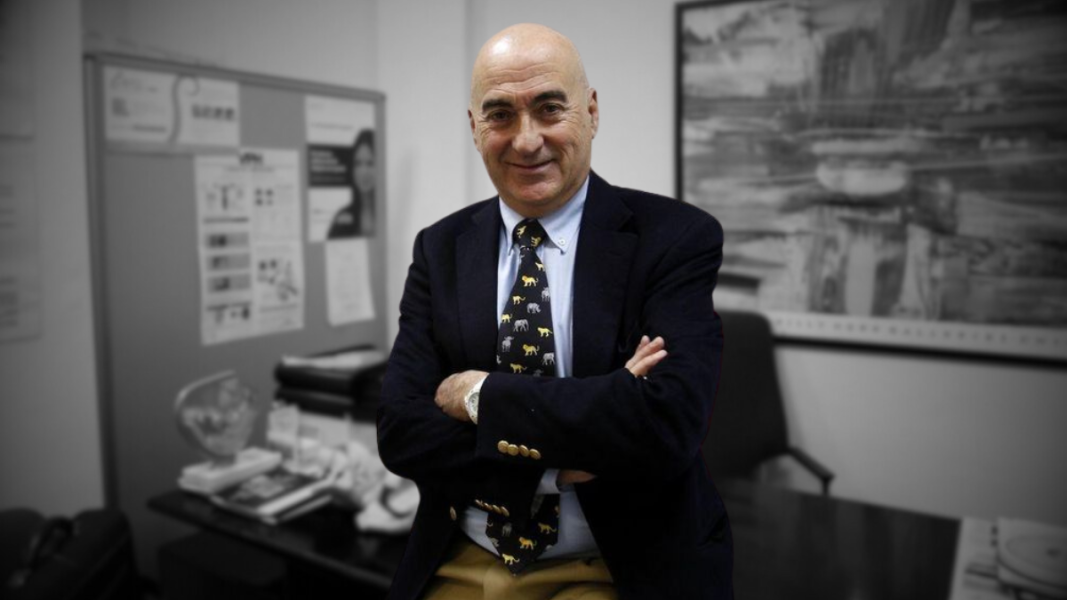
A few days ago, the newspaper El Periódico Mediterráneo published an interview with Dr. Josep Lluís Carbonell i Esteve, director of the Mediterránea Médica clinic in Castellón —with more than 35 years practicing abortions—, in which he states without mincing words that the «post-abortion syndrome has no scientific basis». In that same conversation, he presents himself as a professional who has performed tens of thousands of abortions, and describes the procedure as a mere clinical formality, denying any psychological repercussions for the women who undergo it.
The forcefulness of his statements and his contempt for possible suffering in others reveal an insensitive moral stance: a doctor who has practiced mass abortions and then denies their psychological sequelae incurs in a coldness that can be morally qualified, justly, as satanic.
Medical conversations without compassion
Carbonell describes the pharmacological abortion with technical precision: “48 hours later it causes the drop of menstruation and expels the product of conception”, he states. For him, it is an outpatient process that barely lasts a few hours. That way of speaking—without mention of pain, grief, or loss—demonstrates a radical dehumanization: the child in gestation no longer exists as a person, but as a “product” that must be eliminated efficiently.
Denying post-abortion syndrome as a “fable without scientific basis” implies, in effect, closing one’s eyes to the testimony of women who have experienced anxiety, guilt, depression, and family breakdowns after aborting. Silencing those voices is not neutral; it is to violate the reality of human pain and subject it to a technocratic ideology.
Activism that challenges the law
Carbonell’s intellectual coldness does not arise from nowhere; it has well-documented roots. In 2014, elDiario reported that the doctor offered to break a restrictive abortion law if it came into effect: “I know I’ll end up in jail”, he said, while assuring that he would not abandon his practice due to moral conviction.
His activism is not limited to the local sphere: he collaborated with pharmacological abortion campaigns and initiatives like Women on Waves, using ships to perform abortions in international waters. That trajectory confirms that his stance is not only medical, but deeply ideological.
A banalization of evil
The gesture of speaking of “tens of thousands of abortions” as if it were a mere medical statistic reveals a mind that has numbed moral sensitivity. It is not neutral: it is an indication of perverse indifference. While his clinical speech erases the drama, his practice takes root in the culture of death.
This doctor belittles what does not suit his narrative: the real female pain, the grieving process, and the guilt that many women suffer. Presenting abortion as a simple technical act and denying its consequences is a brutal ideological strategy: to rationalize death and ignore the cry of the victims.