


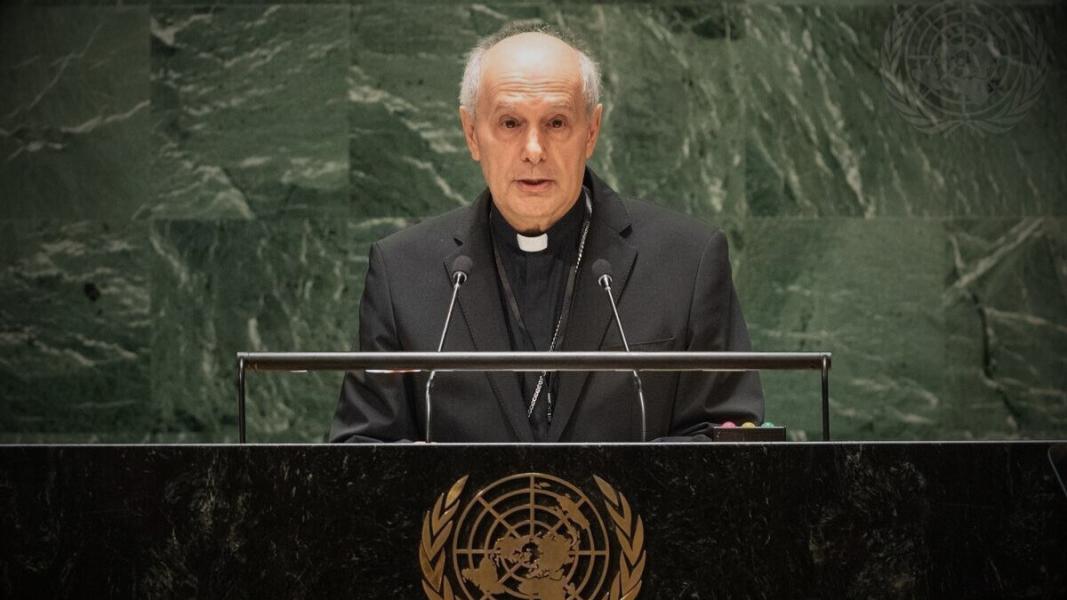
The Holy See recently intervened at the United Nations headquarters in New York, during the session of the Second Committee of the General Assembly dedicated to sustainable development. The Permanent Observer, Msgr. Gabriele Caccia, called on States to act decisively to “heal the ecological debt” that—according to his explanation—the most developed countries have incurred with developing countries.
Shared Responsibilities
In his intervention, reported by Vatican News, Caccia pointed out that the most vulnerable peoples are those who have contributed the least to environmental degradation and yet are the most affected by the consequences of climate change. For this reason, he urged those who have polluted the most to assume greater responsibility through:
- Debt relief for the poorest countries.
- Financial and technological contributions for climate adaptation and mitigation.
- Strengthening of local capacities that allow addressing the ecological crisis with autonomy.
Education and Ecological Conversion
The Permanent Observer also emphasized that the crisis cannot be addressed solely through technical solutions, but requires a profound change in mentality. He spoke of the need for an “integral ecological education” that transforms lifestyles and involves an interior conversion.
In this sense, he stressed that intergenerational justice and the care of biodiversity must be basic principles of all environmental policy.
A Speech in Continuity
The Holy See’s message is in line with the one set by the encyclical Laudato Si’ and reiterated in international forums: the conviction that climate justice requires concrete commitments of international solidarity, especially towards the poorest.
Nevertheless, the intervention maintains the usual diplomatic tone, focused on concepts of social and ecological justice, without explicit references to the core of the Gospel or the spiritual dimension that the Church could also contribute to this global debate.