


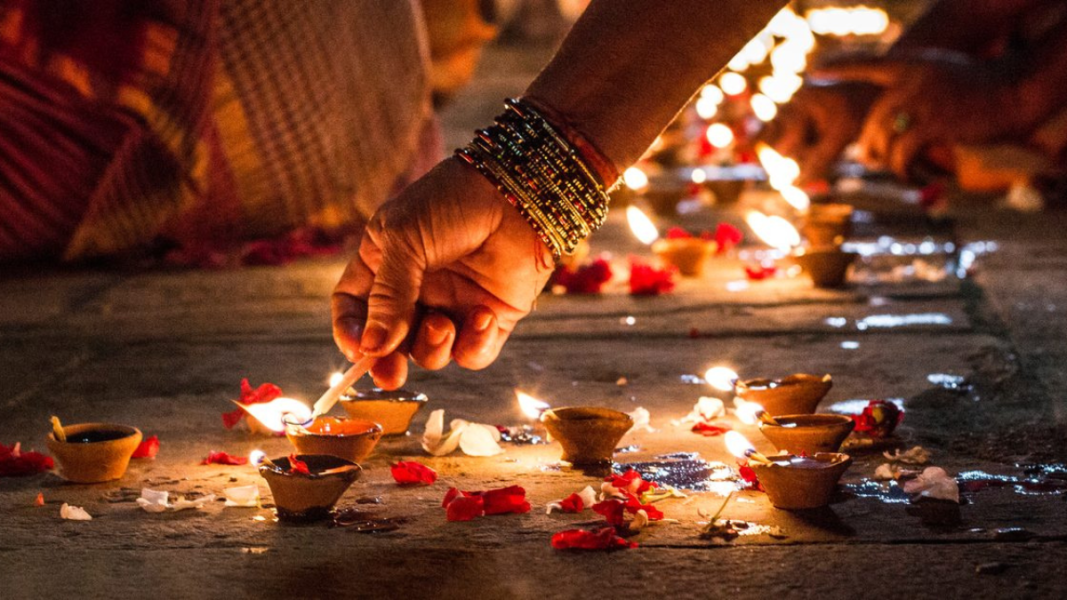
On October 11, the Holy See Bulletin published a message from the Dicastery for Interreligious Dialogue on the occasion of the Hindu festival of Diwali, which will be celebrated on October 20. Under the theme “Hindus and Christians: building peace in the world through dialogue and collaboration in the spirit of Nostra Aetate”, the text congratulates Hindu communities and insists on the need to strengthen interreligious dialogue and collaboration as a path toward world peace.
Signed by Cardinal George Jacob Koovakad and Monsignor Indunil Janakaratne Kodithuwakku Kankanamalage, the message recalls the 60 years of Nostra Aetate and cites both this document and the Document on Human Fraternity (Abu Dhabi, 2019). Significantly, it also includes recent words from Pope Leo XIV, who called for “building bridges through dialogue and encounter.”
The tone is one of religious diplomacy seeking common ground with Hinduism, highlighting values such as peace, fraternity, and justice. But what surprises—and concerns—is what is not said: throughout the message, the name of Jesus Christ does not appear, nor is his role as the only Savior proclaimed. It congratulates a festival linked to pagan myths and presents it as a symbol of “the victory of light over darkness,” without warning that the true triumph of Light over darkness occurred in the Incarnation, the Cross, and the Resurrection of the Lord.
This silence contrasts with what the Magisterium has recalled on numerous occasions. The document Dominus Iesus, promulgated by the Congregation for the Doctrine of the Faith in the year 2000 and signed by the then Cardinal Joseph Ratzinger, was clear:
«The content of this participated mediation must be deepened, always under the norm of the principle of Christ’s unique mediation: «Even though partial mediations of any kind and degree are not excluded, these nonetheless acquire meaning and value only from Christ’s mediation and cannot be understood as parallel or complementary.»44 However, those proposals for solutions that contemplate a salvific action of God outside the unique mediation of Christ would be contrary to the Christian and Catholic faith.» (Dominus Iesus, n. 14).
Furthermore, the same document warns against confusions arising from certain poorly framed interreligious dialogues and where centrality in the relationship must be placed:
«Certainly, the different religious traditions contain and offer elements of religiosity that come from God and that are part of «everything that the Spirit works in men and in the history of peoples, as well as in cultures and religions.» In fact, some prayers and rites can assume a role of evangelical preparation, insofar as they are occasions or pedagogies in which human hearts are stimulated to open to God’s action. However, they cannot be attributed a divine origin or an ex opere operato salvific efficacy, which is proper to the Christian sacraments. On the other hand, it cannot be ignored that other non-Christian rites, insofar as they depend on superstitions or other errors (cf. 1 Cor 10:20-21), rather constitute an obstacle to salvation.» (Dominus Iesus, n. 21).
«The Church, guided by charity and respect for freedom, must primarily commit itself to announcing to all people the truth definitively revealed by the Lord, and to proclaiming the need for conversion to Jesus Christ and adherence to the Church through baptism and the other sacraments, in order to fully participate in communion with God the Father, Son, and Holy Spirit. On the other hand, the certainty of God’s universal salvific will does not diminish but increases the duty and urgency of announcing salvation and conversion to the Lord Jesus Christ.» (Dominus Iesus, n. 22).
This is exactly the risk conveyed by the Vatican message: presenting the religious symbolism of Diwali as positive without doctrinal clarification, as if that idolatrous rite could be equated with the mystery of Christ, “the true Light that enlightens every man” (Jn 1:9).
Interreligious diplomacy, without an anchor in the truth of Revelation, ends up sliding the Church toward a horizontal humanism, well-regarded by the world but lacking the prophetic force of the Gospel. The Church’s mission is not simply to “promote peace” in generic terms, but to announce the Prince of Peace, Jesus Christ, and call all peoples to conversion.
The Dicastery’s message, although presented as a gesture of cordiality toward Hindus, leaves the essential in the shadows: the proclamation of Christ as the only Savior of the world. And that, for a Catholic, can never be a mere secondary nuance.
We provide below the full message and translated published in the Holy See Bulletin:
Hindus and Christians:
Building peace in the world through dialogue and collaboration in the spirit of Nostra Aetate
Dear friends,
The Dicastery for Interreligious Dialogue is pleased to offer its most cordial greetings and best wishes as you celebrate Deepavali on October 20 this year. May this festival of lights illuminate your lives and bring happiness, unity, and peace to your families and communities!
The eighth day after Deepavali will mark this year the sixtieth anniversary of Nostra Aetate (October 28, 1965), the historic document of the Catholic Church that encouraged Catholics worldwide to engage in dialogue and collaboration with people of other religious traditions. It exhorted all to “recognize, preserve, and promote the spiritual and moral goods, as well as the socio-cultural values” found among them (NA 2) in service of peace.
Over these six decades, this historic initiative of interreligious dialogue has evolved into a global project, generously supported and promoted by people of diverse religious beliefs and non-beliefs, contributing significantly to world peace. This very message is the fruit of that noble vision.
In this diamond jubilee, Nostra Aetate calls us to renew our commitment to promoting interreligious dialogue as a path to peace. During this festive season, we invite you to join us in reflecting on how Christians and Hindus, along with people of all religions and goodwill, can strengthen our common efforts for peace through dialogue and collaboration in the spirit of Nostra Aetate.
This spirit is rooted in “promoting unity and love among people, and even among nations,” focusing on “what people have in common and what leads them to communion” (NA 1). It calls us to reject “nothing that is true and holy in these religions” and to hold “in sincere respect those ways of acting and living, those precepts and doctrines” that “reflect a ray of that Truth which enlightens all men” (NA 2). It also inspires a firm resolution to “preserve and promote together, for the benefit of all people, social justice and moral values, as well as peace and freedom” (NA 3).
Although much progress has been made since Nostra Aetate, much remains to be done. In today’s world, where distrust, polarization, tensions, and divisions are on the rise, interreligious dialogue is more necessary than ever. It must continue to sow seeds of unity and harmony, becoming a beacon of hope for all. Interreligious understanding and collaboration must have a place in our daily lives and transform into a natural way of living together.
Pope Leo XIV has called on all people to “build bridges through dialogue and encounter, uniting as one people” (Urbi et Orbi, May 8, 2025). He reminds us that fostering a culture of dialogue and collaboration for peace is “a task entrusted to all, believers and non-believers alike, who must promote it through reflection and a practice inspired by the dignity of the person and the common good” (Address to the Movements and Associations of the “Arena of Peace,” Verona, May 30, 2025). Only by working together can we ensure and sustain a peace founded on truth, justice, love, and freedom (cf. John Paul II, Message for the World Day of Peace, January 1, 2003).
The family, as the primary place of education in life and faith, has an eminent role in the formation of these values. Religious traditions also have a crucial responsibility in fostering peace, with religious leaders having the moral duty to set an example: encouraging their faithful to respect diversity and build bridges of friendship and fraternity. Educational institutions and the media also play an essential role in shaping hearts and minds toward peaceful coexistence. In this way, interreligious dialogue and collaboration can and must be welcomed as indispensable tools for cultivating a culture of peace; they must become a powerful and dynamic movement dedicated to building and defending peace at all times.
As believers rooted in our respective faith traditions, and as people united by shared values and a common concern for peace, may we—Hindus and Christians, along with those of other religions and all people of goodwill—join hands, both in small and large gestures, to cultivate peace in our homes, communities, and societies. Let us strive to build world peace by fostering “a culture of dialogue as a path; mutual cooperation as conduct; reciprocal understanding as method and criterion” (Document on Human Fraternity for World Peace and Living Together, February 4, 2019).
We wish you all a happy Deepavali!
Cardinal George Jacob Koovakad
Prefect
Mons. Indunil Janakaratne Kodithuwakku Kankanamalage
Secretary