


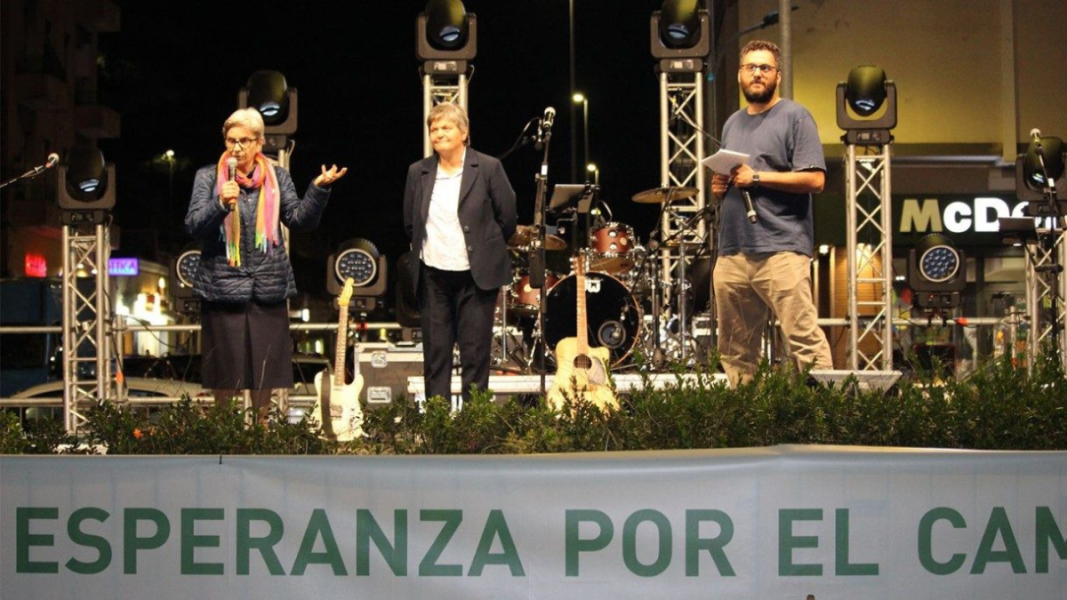
Within the framework of the Jubilee of Consecrated Life, the Dicastery for Institutes of Consecrated Life and Societies of Apostolic Life organized yesterday in Rome an initiative titled “Dialogue with the City”. The event took place in Piazza Vittorio Emanuele, in the central Esquilino neighborhood, and in the more peripheral Piazza Don Bosco (Cinecittà) and Piazza dei Mirti (Centocelle), areas marked by a strong multiethnic presence.
Religious men and women from the five continents participated in activities of a cultural, artistic, and spiritual nature. The program was led by the prefect of the Dicastery, Sister Simona Brambilla, the Salesian pro-prefect Ángel Fernández Artime, and the secretary Sister Tiziana Merletti.
Messages of fraternity and social justice
In her intervention at Piazza Vittorio, Sister Brambilla spoke about “Universal Fraternity and Solidarity”, emphasizing the need to respond to the wounds caused by war, oppression, injustice, and discrimination.
The Salesian Fernández Artime referred to the “Care for Creation and Protection of the Environment” in front of the temple founded by Saint John Bosco, while Sister Merletti intervened in Centocelle on “Listening to the Cry of the Poor”, in reference to the commitment of consecrated persons to the most marginalized.
The event was accompanied by a call to the apostolic exhortation Dilexi te, published that same day by Pope Leo XIV, centered on the love of Christ as the source of attention to others’ sufferings and participation in his work of liberation.
Risk of diluting the mission of consecrated life
While the initiative sought to show closeness to Rome’s most popular and diverse neighborhoods, the messages conveyed—centered on solidarity, ecology, and social justice—run the risk of reducing the identity of consecrated life to a sociopolitical discourse, in tune with worldly values but without an explicit proclamation of the Gospel.
The core of the consecrated vocation is not only social action, but giving public witness to Christ and announcing salvation. Turning religious into spokespersons for humanitarian causes may give a “useful” image for society, but it blurs their reason for being: total consecration to God and the call to lead souls to Christ.
Where are we headed?
The “dialogue with the city” held in the Roman squares reflects a growing trend in ecclesial sectors: prioritizing the language of universal fraternity and environmental sustainability over the proclamation of faith.
Consecrated life, however, does not exist to be just another actor in the social fabric, but to remind the world of God’s primacy. When altars are replaced by stages and the Gospel by social justice slogans, the Church loses the clarity of its mission and dilutes itself in the noise of a discourse that is more political than Christian.