


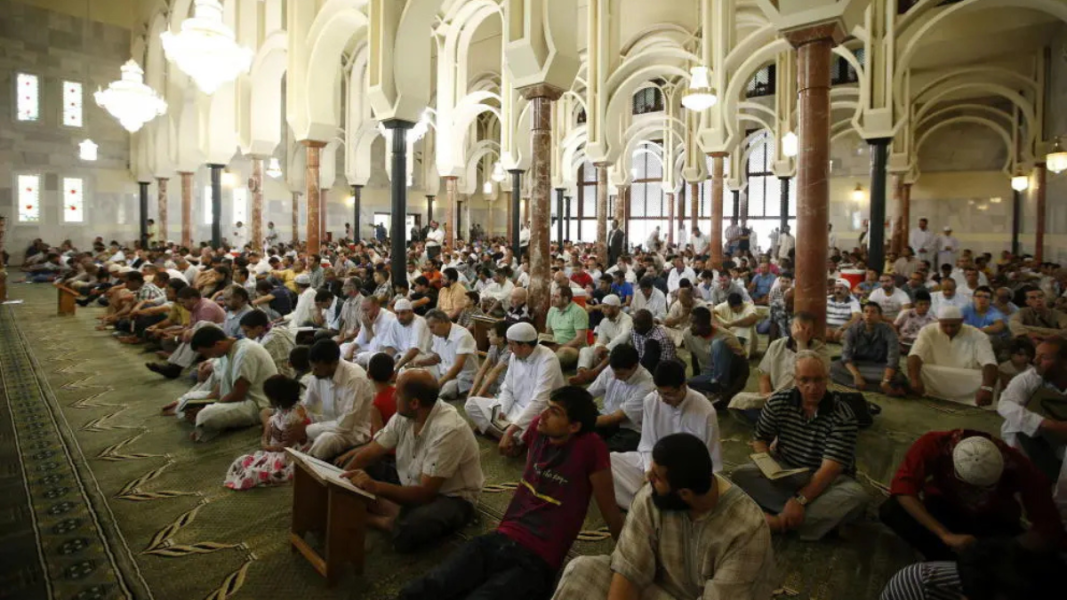
Spain, a land that for centuries defined itself as Catholic, is today experiencing a silent but profound process of transformation. Official data show that Islam already has 2.5 million faithful —5% of the population— and nearly 1,900 mosques and prayer rooms in the country. At the same time, one in every four registered temples is not Catholic, reflecting a growing pluralism that poses first-order pastoral and cultural challenges for the Church.
A Church still majority, but in proportional retreat
The Observatory of Religious Pluralism indicates that, of the 30,949 places of worship in Spain, 22,933 are Catholic parishes. Although Catholicism remains the majority confession, the proportion has changed drastically: just a few decades ago, all temples were Catholic; today, 25% belong to other confessions.
This phenomenon is largely explained by the advance of evangelicals —who already exceed 4,400 temples— and by the rapid expansion of Islam, which has nearly doubled its places of worship since 2011.
The advance of Islam in Spain
According to the UCIDE study, 2,542,498 Muslims reside in Spain. Of them, 1.1 million are already Spanish —either by naturalization, birth, or origin from Ceuta and Melilla— and the rest, about 1.4 million, immigrants. The majority come from Morocco (36%), followed by Pakistan, Senegal, and Algeria.
The implantation is especially intense in Catalonia (694,046 Muslims), Andalusia (417,139), Madrid (323,700), and the Valencian Community (278,370). Cities like Barcelona, Ceuta, Madrid, and Melilla concentrate the largest communities, and municipalities like Salt (Girona), Níjar (Almería), or Talayuela (Cáceres) present very high percentages of Muslim population.
The territorial expansion of Islam implies not only the presence of prayer rooms, but also the organization of local communities, associations, and demands for infrastructure, such as Islamic cemeteries, of which 95% of communities still lack.
Education and transmission of the faith
The school sphere reflects another decisive aspect: in Spain there are nearly 391,000 Muslim students, but 85% lack regulated Islamic religion classes. Even so, 311 Islamic religion teachers have been hired, especially in Andalusia, Catalonia, and Madrid, consolidating the presence of Islam in the educational system.
For Catholics, this is a warning. While the Church in Spain suffers a drastic drop in teaching vocations and attendance at Catholic religion classes, other confessions, such as Islam, are expanding their educational base and seeking to consolidate themselves among the new generations.
A recent fact illustrates how Islam is inserted into public life: the school cafeterias of six public schools in Ceuta will serve only halal meat, and pork will not be used in their menus during the 2025-2026 school year, according to official contracts published in the Boletín Oficial del Estado (BOE).
A call to the evangelizing mission
The advance of Islam and the rise of other confessions constitute a direct challenge for the Catholic Church in Spain, which cannot limit itself to noting figures.
-
Strengthen the faith of Catholics: the lack of religious practice and secularism have weakened Catholic identity, opening space for the expansion of other confessions.
-
Defend the Christian cultural identity: Spain, which was called “land of Mary,” runs the risk of diluting its Christian heritage if Catholics do not keep the faith alive in public and family life.
-
Evangelize with boldness: religious pluralism cannot become an excuse for silence. The Church must proclaim Christ with greater clarity, without yielding to relativist pressures.
It is not just statistics
The fact that one in every four temples in Spain is not Catholic and that Islam already gathers 2.5 million faithful is not just a statistical issue: it is a wake-up call for Catholics. Spain, once a bastion of the faith, faces a decisive evangelizing challenge today.
The response cannot be resignation or indifference. The Church must reaffirm its mission and awaken the conscience of the faithful, remembering that the spiritual future of Spain will depend on fidelity to Christ and his Gospel.
Sources: Observatory of Religious Pluralism (2024), Demographic study of the Muslim population prepared by the UCIDE and the Observatorio Andalusí (2025) and El Faro de Ceuta