


By: Rafael López
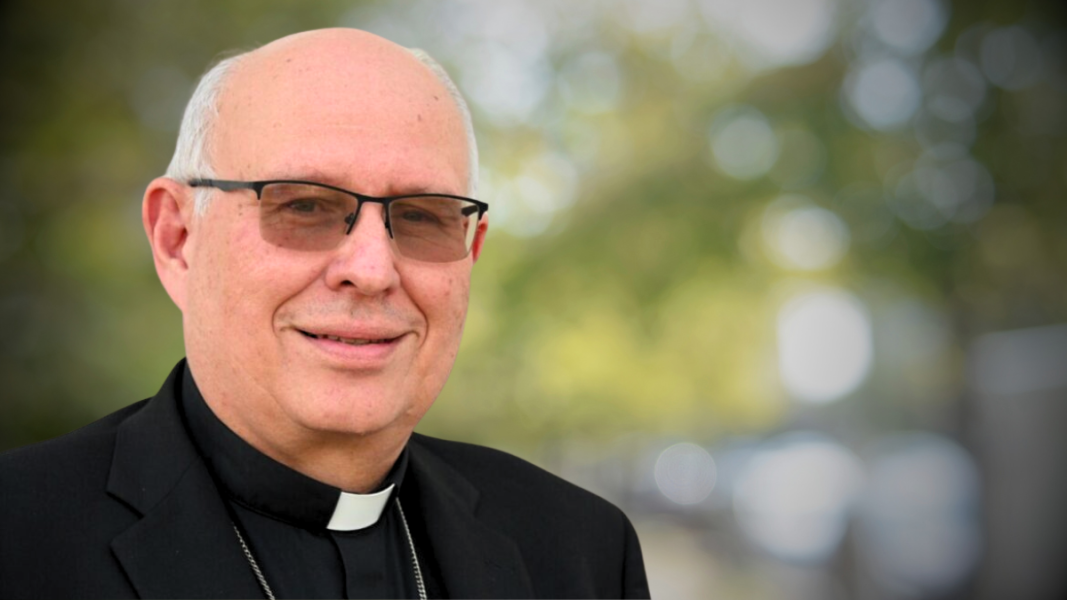
The figure of the current Archbishop of Caracas, Mons. Raúl Biord, has sparked an intense debate in recent months within the Venezuelan Catholic Church and in public opinion. Various testimonies from nuns, laity, and priests, as well as social perception studies, indicate that his management would be marked by centralism, lack of pastoral closeness, weakening of the Church’s prophetic voice, and gestures of complacency towards the Nicolás Maduro regime.
Accusations and Questionings
Among the most frequent allegations are:
- Abuse of power and institutional control: he is accused of imposing an authoritarian style of government within the Archdiocese of Caracas, limiting the autonomy of bodies such as the Venezuelan Conference of Religious (CONVER) and displacing laity who previously had prominence in pastoral tasks.
- Mistreatment and lack of dialogue: priests, nuns, and laity have denounced attitudes of psychological mistreatment and decisions taken unilaterally, which would have generated discontent in various ecclesial sectors.
- Opaque management of resources: in his previous diocese of La Guaira, he is linked to questionable handling of funds in infrastructure projects and in the administration of CONVER resources.
- Weakening of the Vicariate for Human Rights: this body, previously active in the defense of political prisoners and in care for vulnerable families, has lost relevance since his arrival at the archbishopric. For many, this silence is interpreted as a way of invisibilizing injustices and avoiding confrontations with political power.
- Delivery of patrimonial data to the State: under his coordination, religious congregations were asked to detail assets and properties for registration in government bodies, which has been perceived as a risk to the security and sustainability of schools, health centers, and the Church’s social works.
Perceptions in Venezuelan Society
Opinion studies and interviews collect three main trends regarding the role of the Church today:
- A nostalgic vision, the majority, that remembers the Church as a defender of human rights and close to the poor, in contrast to the current perception of a passive and distant Church.
- A understanding reading, that interprets the lack of action as a product of real limitations (scarcity of resources, pressures from the regime).
- A more critical stance, that sees in the ecclesial hierarchy an attitude of comfort or even complicity with political power.
In this context, the figure of Mons. Biord repeatedly appears associated with a distant Church, focused on the sacramental, with visible gestures towards political power but with scant presence in the daily life of the sectors most affected by the crisis.
Risks and Consequences
The collected testimonies warn of important risks both for the Church and for Venezuelan society:
- Loss of moral credibility: the perception of closeness between the ecclesial hierarchy and the political regime—internationally noted for human rights violations and accusations of narcoterrorism—weakens the Church’s moral authority.
- Patrimonial vulnerability: the delivery of information about congregational assets can facilitate eventual state control or expropriation.
- Pastoral disconnection: a Church that limits its mission to the celebratory sphere runs the risk of becoming socially irrelevant and abandoning its historical role as the voice of the weakest.
- Social impact: in a country marked by repression and humanitarian crisis, the absence of a prophetic voice from the Church leaves the population more unprotected and without a solid ethical reference.
A Call to Reflection
The situation of the Archdiocese of Caracas poses a fundamental challenge for the Venezuelan Church. Several observers warn that, if the practices of centralism and the selection of «manipulable» bishops are maintained, the loss of trust and moral influence will deepen.
The question that resonates among many faithful does not limit itself to the person of Mons. Raúl Biord, but to the role of the Venezuelan Church as a whole: will it continue to be an institution capable of accompanying the people in their suffering and raising its voice against injustices, or will it be reduced to a passive actor, closer to power than to its own flock?