


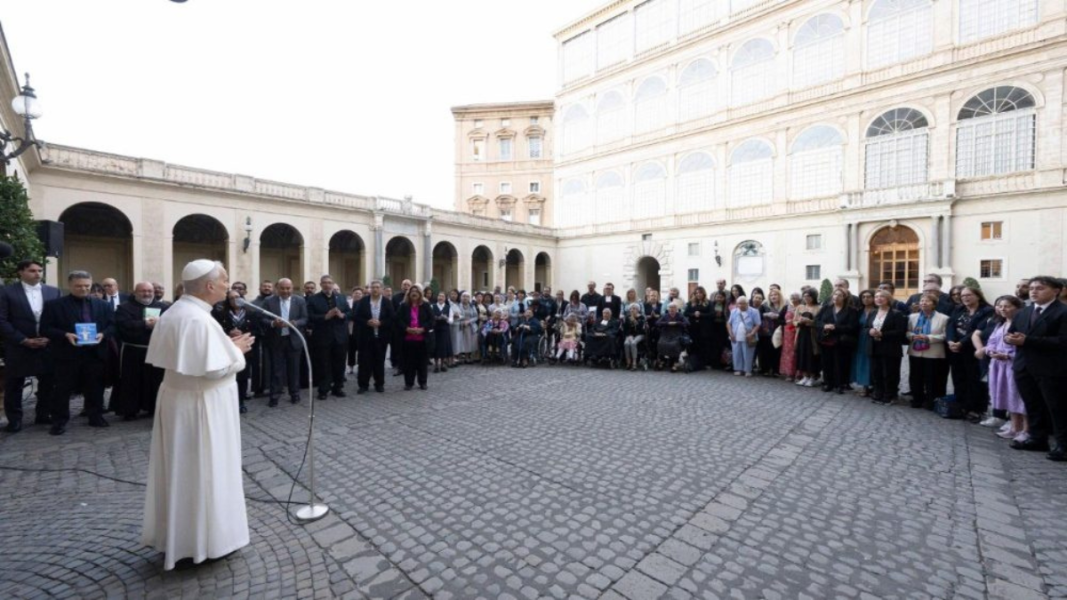
Pope Leo XIV held two key meetings this week at the Vatican with leaders of the Hispanic pastoral and bishops from the United States, encouraging them to be witnesses to God’s love and to respond clearly to the migration measures promoted by the Donald Trump administration. In both messages, the pontiff emphasized that “God never abandons the smallest, the poor, the foreigner.”
Meeting with the Hispanic Pastoral at the Vatican
This Tuesday, the pope received in the Apostolic Palace a hundred representatives of the Hispanic Pastoral of the United States, who had traveled from more than fifty dioceses to participate in the Jubilee of Migrants. With a paternal tone, the pontiff expressed: “you have in your hands a very great task, which is to accompany people who really need a sign that God never abandons anyone, the smallest, the poorest, the foreigner”. He exhorted them to persevere in the pastoral mission, being visible witnesses to the Gospel in a world marked by violence, war, and hatred.
The Pope concluded his intervention by thanking the dedication of the pastoral agents and giving them his blessing:
“may God strengthen you and may your hearts always be filled with faith and hope”.
Meeting with Bishops on Trump’s Migration Policy
The following day, the pope met with U.S. bishops and social workers on the border with Mexico. According to Reuters, the Pope received dozens of letters written by immigrants expressing their fear of deportations under President Donald Trump’s policies.
The Bishop of El Paso, Mark Seitz, noted that the Holy Father expressed his desire for the United States Conference of Catholic Bishops to speak “firmly” about the treatment received by immigrants. “Our Holy Father is very personally concerned about these matters,” Seitz affirmed.
The meeting showed a firm pastoral tone: the Pope insisted that attention to immigrants is part of the Catholic commitment to life, human dignity, and the Gospel. In this sense, he questioned whether the White House’s restrictive measures were compatible with the Church’s pro-life teaching.