


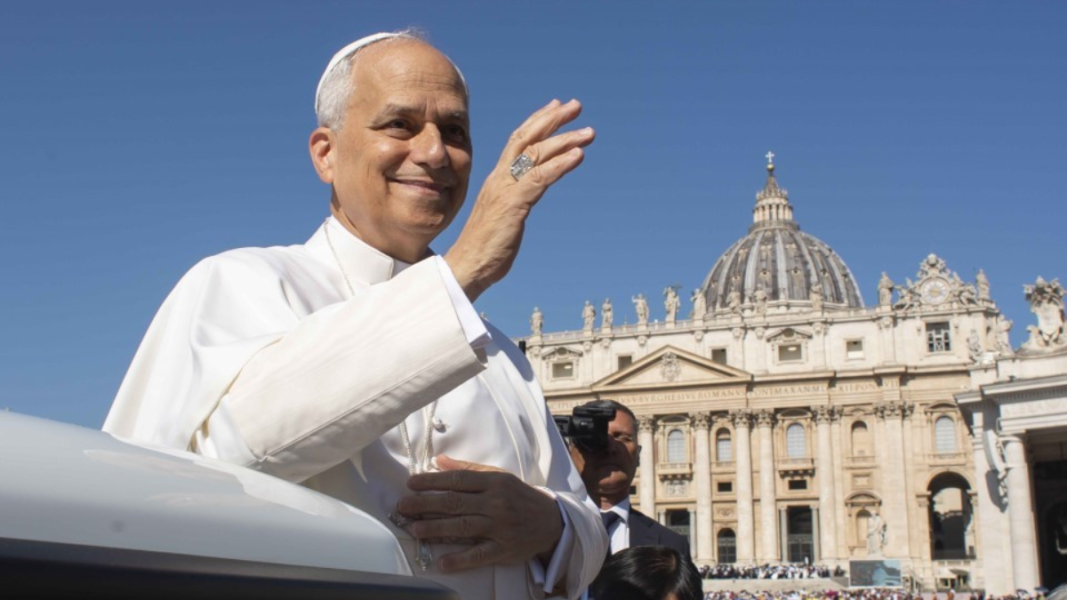
The Vatican published on this October 9 the first apostolic exhortation of Pope Leo XIV, titled Dilexi te. It is a text that the Pontiff presents as a continuation of a project initiated by his predecessor Francis and which he now assumes with his own seal. The exhortation, disseminated in several languages and officially presented by the Holy See Press Office, focuses on a fundamental theme of the Gospel: love for the poor as a concrete expression of Christ’s commandment.
From the first pages, Leo XIV emphasizes that attention to the poor cannot be reduced to philanthropic gestures, but constitutes a true sacrament of the Lord’s presence. It is not an optional addition to the Christian path, but an essential axis of the Church’s mission. The Pope states that the encounter with those who suffer, in any of their forms of poverty—material, cultural, spiritual, or social—transforms the believer and calls them to a lifestyle consistent with faith.
The centrality of love and the denunciation of injustice
The text traces the biblical and patristic roots of this tradition, recalling how the Fathers of the Church and the saints, from St. Augustine to St. John Chrysostom, insisted that the poor are the treasure of the Church and the living presence of Christ. The Pope also points out that unjust structures and ideologies that perpetuate inequalities are obstacles to living the commandment of love. In this sense, the exhortation does not limit itself to an intimate spiritual plane, but launches a call for social transformation, reminding that Christian faith cannot be divorced from justice.
The style of the document is exhortative and pastoral. Leo XIV invites the Church to constantly return to the source of the Gospel, where love for the poor and the experience of grace are inseparably united. The Pontiff warns that it is not a matter of choosing between spiritual charity or social action, but of recognizing that both dimensions illuminate each other.
The language and the sources
An examination of the text in Spanish allows identifying the accents of the new Pope. The word “poor” is the most repeated, followed by “love,” “charity,” and “Christ.” These terms reflect the intention to anchor the entire document in a theology that links following Jesus with concrete service to those who suffer. Action verbs such as “welcome,” “listen,” and “serve” also appear frequently, reinforcing the exhortative tone of the writing.
As for the sources, the Sacred Scriptures and the Fathers of the Church predominate clearly. Leo XIV cites the Old Testament, the Gospels, and the Pauline letters, in addition to recovering the magisterium of saints like Ambrose, Cyprian, or Lawrence. Compared to other recent documents that usually relied on social analyses or technical data, this exhortation is built almost exclusively on theological and patristic foundations, which gives it a more classical imprint.
A style that marks a pontificate
Dilexi te appears as the first programmatic text of Leo XIV and offers clues about the direction of his pontificate. While it collects the legacy of Francis, the emphasis placed on continuity with the biblical and patristic tradition suggests an attempt to root the social discourse in a solid doctrinal framework. The Pope proposes, in short, that love for the poor not be a topical issue or a matter of sociological sensitivity, but a criterion of Christian authenticity inseparable from the Gospel.
You can access the full apostolic exhortation here