


The long ecclesiastical process for the sexual abuses committed by the priest Eleuterio Vásquez González, known as Father Lute, in the Peruvian diocese of Chiclayo, has entered a new phase. After more than three years without receiving official information, the victims have submitted a formal request to access the complete canonical file of the case.
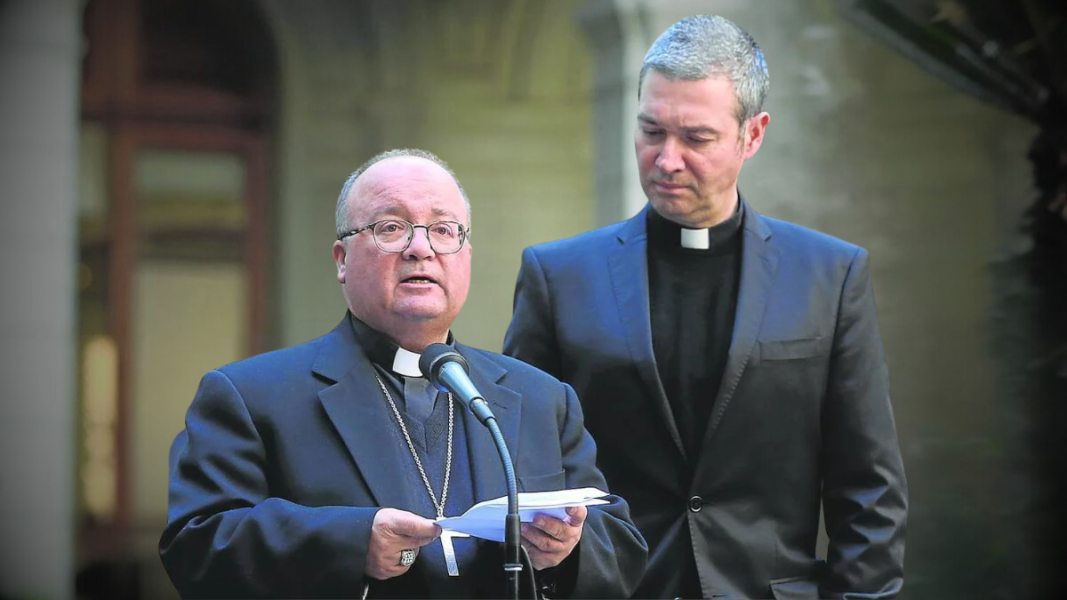
The letter, dated October 3, 2025 and also signed by the complainants’ lawyer, was addressed to Msgr. Charles Jude Scicluna, adjunct secretary of the Dicastery for the Doctrine of the Faith. It was also sent with a copy to the Bishop of Chiclayo, Msgr. Edinson Edgardo Farfán Córdova, and to the last instructor, Giampiero Gambaro. In it, they expressly invoke the victims’ right to “know the real status of the process and exercise their rights with the due information”.
Three Years Without Access to Essential Documents
In the document, Ana María Quispe and the other two complainants state that they have not received any copies of the fundamental documents of the canonical process, not even of their own statements, which were taken by the diocesan delegate Oswaldo Clavo in December 2023.
It should be recalled that in the initial stage, in 2022, the then Bishop of Chiclayo, Msgr. Robert Prevost, did not take formal statements from the victims. For this reason, they consider it essential to know how their accounts were recorded and processed by the Church, beyond the police complaint that gave rise to the case. As they explain, only by reviewing the internal documentation will it be possible to verify whether the information was presented in a complete and coherent manner. It is particularly difficult— they assert—to understand how facts such as the transfer of minors to an isolated parish facility to spend the night alone with the priest did not prompt an immediate suspension.
Basic Documentation to Ensure Transparency
The request precisely lists the documents they are demanding:
- The decree of precautionary measures signed by Msgr. Prevost in May 2022.
- The document elevating the file to the Vatican from that same year.
- The document accompanying the referral of the civil file due to prescription (February 2023).
- The decree of archiving pro nunc issued by the Doctrine of the Faith on August 10, 2023.
- The statements taken by Oswaldo Clavo in December 2023 after the case was reopened.
- The document of the second elevation of the file to Rome, dated January 26, 2024.
Accessing these texts—they argue—is essential to “know precisely the procedural status of the case, ensure transparency, and exercise their rights with the due information”. Their delivery would allow, for the first time, the legal team of the Ius Canon association, which represents the complainants, to reconstruct in a verifiable way everything that happened during these three years of ecclesiastical processing. The victims emphasize their right to verify whether, as some media outlets and the Pope’s biography-interview published by Elise Allen have claimed, the management of the case was truly “impeccable”.
Second Attempt Before the Vatican
This is not the first time the victims have tried to access these documents. In June and July 2024, they already submitted similar requests both to the Diocese of Chiclayo and directly to the Dicastery for the Doctrine of the Faith. For some reason, Charles J. Scicluna put the victims’ requests (formally submitted with an entry stamp) in the drawer of oblivion, from which they have not emerged in more than a year. For transparency’s sake, the reason should be explained.
With this new document, the complainants seek to have the Vatican authority oversee the management of the file initiated in 2022 and ensure that they can know how their case has been processed. In their view, the entire procedure has been marked by opacity and absence of basic information, a situation they hope to reverse with direct intervention from Rome.
A Controversial Maneuver to Close the Case
The debate has intensified in recent days due to what the complainants describe as an attempt to “close falsely” the file: the “trapping” granting of the grace of dismissal from the clerical state to the accused. According to their complaint, this outcome—pushed with the backing of some prominent ecclesiastical positions—would allow the case to be closed without fully clarifying responsibilities or guaranteeing the victims’ right to the truth and to the complete documentation of the process. For them, a measure of this type cannot replace a transparent examination of the file or the sanctions that may correspond, if any.