


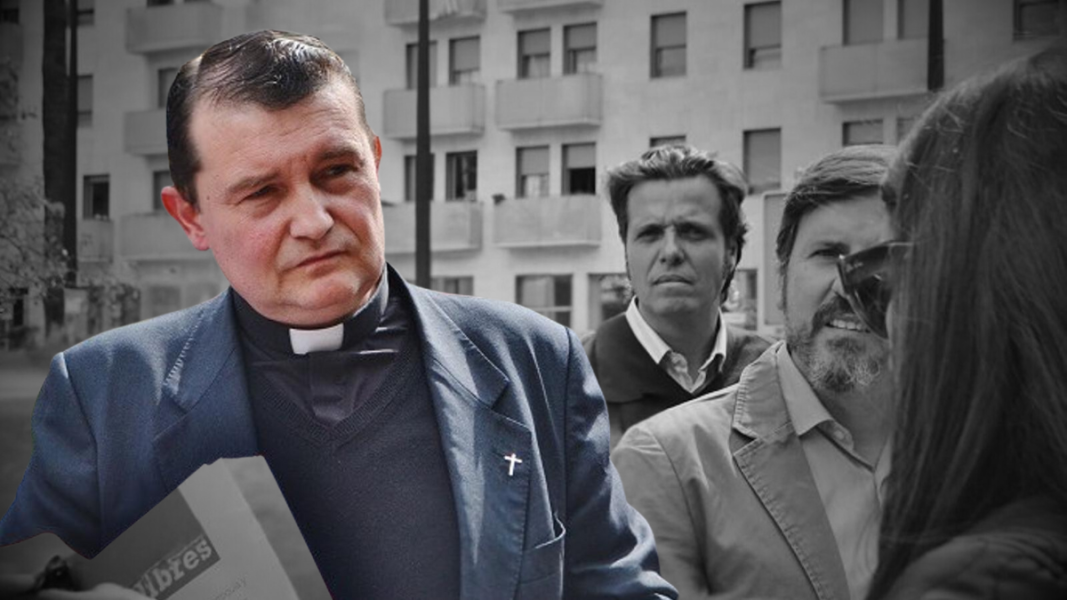
The priest from the Diocese of Barcelona, Custodio Ballester, is sitting in the dock today accused of a hate crime for an article published in 2016 on the blog Germinans Germinabit titled “The Impossible Dialogue with Islam.” The prosecution is seeking two and a half years in prison for him, following a complaint filed by the association Musulmanes contra la Islamofobia, a Barcelona-based entity presided over by Ibrahim Miguel Ángel Pérez, a convert to Islam with known ties to local political platforms such as Barcelona en Comú and that has received public subsidies from the Ayuntamiento and the Generalitat.
Ballester’s article is harsh, even provocative in its expressions, but at no point does it call for violence or the persecution of Muslims. It is a theological and cultural reflection rooted in the tradition of confronting doctrines contrary to the faith. Turning those words into a criminal offense and demanding prison time opens a dramatic door: that of criminalizing conscience, speech, and religious judgment.
I do not share, as Custodio expressed, that dialogue with Islam is “impossible.” There are insurmountable doctrinal differences, evident heresies from the Catholic perspective, and cultural abysses that are difficult to bridge. But there are also coincidences that should not be ignored: Muslims venerate the archangel Gabriel, recognize the perpetual virginity of Mary, confess that Jesus was raised to heaven, and await his glorious return at the end of time. Those truths, though incomplete, offer common ground for conversation and coexistence. Another matter is the fruit of that dialogue and its limits, but denying it outright would be unjust. The problem is not that the Corán contains warlike suras, just as it is not a problem that the Talmud includes offensive passages toward gentiles, even going so far as to hold—with less public scandal—that Christ would be in hell. The problem lies in the hermeneutics: in how those texts are applied.
History shows us an Islam that at times knew how to coexist with Christians in Syria, Palestine, Lebanon, Iraq, or Egypt, that even fought alongside ours in 1936, and that inspired secular and national movements like Nasserism or Baathism. An Islam that was paradoxically destroyed to a large extent by wars fueled from the outside, by those who selectively tear their garments over one or another sacred text.
That said, the case of Father Custodio should not be read as an automatic endorsement of every phrase in his article, but as the defense of an essential principle: the right of a priest—and of any citizen—to express himself on religious and cultural issues without the risk of being criminally persecuted. The Church has always known how to respond to error with arguments and charity, never with imposed silences. Judicializing a theological judgment is an attack on common sense and a precedent that threatens the very mission of the Church and the validity of religious freedom in our society.
To all this is added a painful fact: Father Custodio has been left alone. His own bishop, Omella, has not made a single public statement in defense of his priest, limiting himself to calling him to jokingly say that he will visit him in prison. The Episcopal Conference and the verbose Magán have remained silent, and Catholic media have normalized the process, as if it were commonplace to demand prison for a priest over a theological judgment. It is a drama that the Church in Spain accepts with resignation—or indifference—that a presbyter is criminally persecuted for opining on religious texts.