


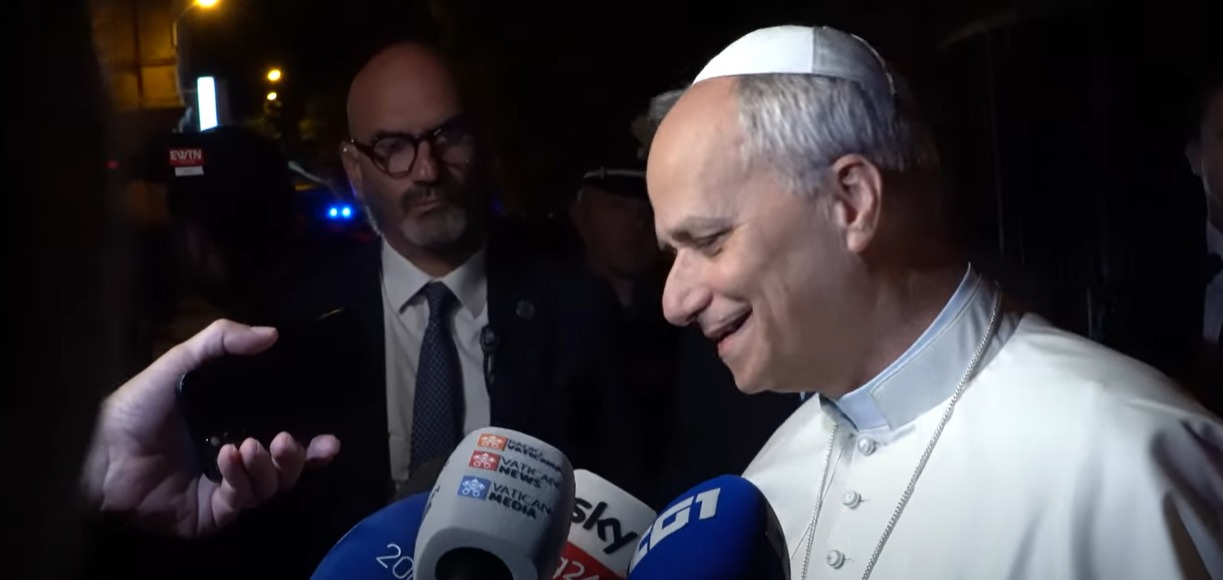
At the exit from Castel Gandolfo, Pope Leo XIV responded to the controversy over the award that Cardinal Blase Cupich will give to Democratic Senator Richard Durbin, known for his history of support for pro-abortion laws. The pontiff first stated that he was not familiar with the matter, then said:
“I think it is important to look at the overall work that a senator has done during, if I am not mistaken, 40 years of service in the United States Senate. I understand the difficulty and the tensions. But as I have said on other occasions, it is important to look at the many issues related to the teaching of the Church.”
And he added:
“Someone who says ‘I am against abortion’ but is in favor of the death penalty is not really pro-life. Someone who says ‘I am against abortion’ but agrees with the inhuman treatment of immigrants in the United States, I don’t know if that is pro-life. They are very complex issues and I don’t know if anyone has all the truth about them, but I would ask first and foremost that we respect each other and seek the path together.”
Below is the verbatim text and video of the question and answer to the Pope:
One thing that has become a very, very divisive subject in the U.S. right now is Cardinal (0:07) Cupich giving an award to Senator Durbin. (0:13) So people of faith are having a hard time with understanding that Cupich is pro, or (0:18) rather is for, legalized abortion. (0:21) How would you help people of faith right now decipher that, feel about that, and how do (0:26) you feel about that? (0:28) I’m not terribly familiar with the particular case.
I think that it’s very important to look at the overall work that the Senate has done (0:39) during, if I’m not mistaken, 40 years of service in the United States Senate. (0:45) I understand the difficulty and the tensions, but I think, as I myself have spoken in the (0:51) past, it’s important to look at many issues that are related to what is the teaching of (0:56) the church. (0:57) Someone who says I’m against abortion but says I’m in favor of the death penalty is not (1:02) really pro-life.
(1:03) So someone who says that I’m against abortion but I’m in agreement with the inhuman treatment (1:11) of immigrants for the United States, I don’t know if that’s pro-life. (1:14) So they’re very complex issues. (1:17) I don’t know if anyone has all the truth on them, but I would ask first and foremost that (1:22) there be greater respect for one another and that we search together both as human (1:28) beings, in that case as American citizens or citizens of the state of Illinois, as well (1:34) as Catholics to say we need to really look closely at all of these ethical issues and (1:40) to find the way forward as church. Church teaching on each one of those issues is very clear. Thank you very much.
Question:
«One thing that has become a very, very divisive issue in the United States right now is that Cardinal Cupich will give an award to Senator Durbin. The faithful are having difficulty understanding that Cupich is pro, or rather in favor of legal abortion. How would you help the faithful to understand this, how they should feel about it? And how do you feel about it?»
Pope’s Response:
«I am not very familiar with the particular case. I think it is very important to look at the overall work that the senator has done during, if I am not mistaken, 40 years of service in the United States Senate.
I understand the difficulty and the tensions, but I think, as I have said in the past, that it is important to look at many issues related to the teaching of the Church. Someone who says ‘I am against abortion’ but ‘I am in favor of the death penalty’ is not really pro-life. And someone who says ‘I am against abortion’ but ‘I agree with the inhuman treatment of immigrants in the United States,’ I don’t know if that is pro-life.
They are very complex issues. I don’t know if anyone has all the truth about them. But I would ask, first and foremost, that there be greater mutual respect and that we seek together, as human beings, in this case as American citizens or citizens of the state of Illinois, as well as Catholics, to look closely at all these ethical matters and find the way forward as a Church. The teaching of the Church on each of those issues is very clear. Thank you very much.»
These words, in which the Pope equates abortion with capital punishment and other social issues, and in which he relativizes the matter by appealing to “decades of political service,” have raised alarms because they introduce fallacies that dilute the Church’s moral teaching.
By the way, it’s curious that, for not being familiar with the matter, he knows perfectly well how long Durbin has been in the United States Senate. Perhaps he does know the matter, more than he claims to know it.
The fallacy of confusing moral planes
The Pope, in justifying that a pro-abortion senator can receive an ecclesiastical award for his “complete trajectory,” falls into a very dangerous fallacy: he shifts the debate from the essential to the accessory. Introducing issues like the death penalty or immigration to relativize abortion is a sophism introduced by Cardinal Bernardin, Archbishop of Chicago and predecessor of Cupich, whom the Pope had already cited in Chiclayo as a moral authority. The Church has always taught that the defense of innocent life has a qualitatively different weight from other social matters. Placing all issues on the same plane dilutes the hierarchical principle of moral values and opens the door to a devastating pastoral relativism.
Read also: Prevost’s speech on the theory that Cupich invokes to award abortionists
The lightness regarding the death penalty
The statement that “someone who opposes abortion but supports the death penalty is not really pro-life” ignores the doctrinal tradition of the Church. For centuries, capital punishment was considered a legitimate resource of civil authority in defense of the common good, and this was even recognized by the Catechism of the Catholic Church until its recent modification. Equating abortion—which kills defenseless innocents—with capital punishment—applied to the guilty after a judicial process, and in force until a few years ago in the Vatican—is a historical and theological falsification. It is grave that a Pope trivializes in that way a matter that has been so carefully nuanced by doctrine.
The risk of legitimizing the pro-abortion politician
Saying that the “overall” work of a politician must be evaluated, including “forty years of service,” introduces a utilitarian logic into the heart of Catholic morality. No social good can erase the stain of supporting laws that allow the systematic murder of the unborn. Justifying that a politician with a radically pro-abortion history be honored by a cardinal is to betray the teaching of St. John Paul II in Evangelium Vitae, where it is affirmed that innocent life is a non-negotiable value. It is a discourse that, in practice, provides cover for the culture of death under the guise of a supposedly “integral” vision.
The weakening of the Church’s voice
While numerous bishops in the United States have had the courage to publicly denounce this award, the Pope’s words operate in the opposite direction: they minimize the gravity of the scandal and discredit the pastors who, faithful to doctrine, have sought to avoid confusion among the faithful. The result is a divided Church, where moral clarity yields to political calculation and fidelity becomes a cause for confrontation. The prophetic voice that should resound firmly against abortion is stifled under an ambiguous discourse that mixes truths with fallacies.
A grave doctrinal setback
The statements of Leo XIV do not formally change the doctrine, but in the pastoral and media realm they represent a very serious setback. It sends the world the message that abortion is just one more topic in a catalog of social issues, and not the bleeding wound that cries out to heaven. The confusion of moral categories, the manipulation of examples, and the lightness with which the tradition of the death penalty is dismissed reveal an imprudent and unjust way of speaking. For those who expect light and clarity from the Pope, it is painful to see that instead of confirming in the faith, the door is opened to confusion.