


By Michael Pakaluk
Catholics who travel between the United States and Europe claim that there is a notable difference between the Catholic cultures of both places. These testimonies are anecdotal, of course. But this is what I see and hear: that on the American side, practicing Catholics seem younger and more hopeful; their culture is more vigorous; it is more frank; it has a bolder public presence. Look to the next generations. It is building the future. In summary, it is more apostolic and evangelizing.
If this is true —some European friends have asked me—, how would I explain it, as an American?
I replied that there are deep fibers in the American character that make Americans especially well prepared to live the faith in the contemporary world, in the true spirit of the Second Vatican Council. (Yes, my friends and I remain very enthusiastic about what Vatican II actually taught).
Consider the idea that the “first freedom” is not freedom of expression, but religious freedom, based on a fundamental duty to serve God. “This duty” —James Madison famously wrote— “precedes, both in order of time and degree of obligation, the claims of civil society. Before any man can be considered as a member of civil society, he must be considered as a subject of the Governor of the Universe” (Memorial and Remonstrance).
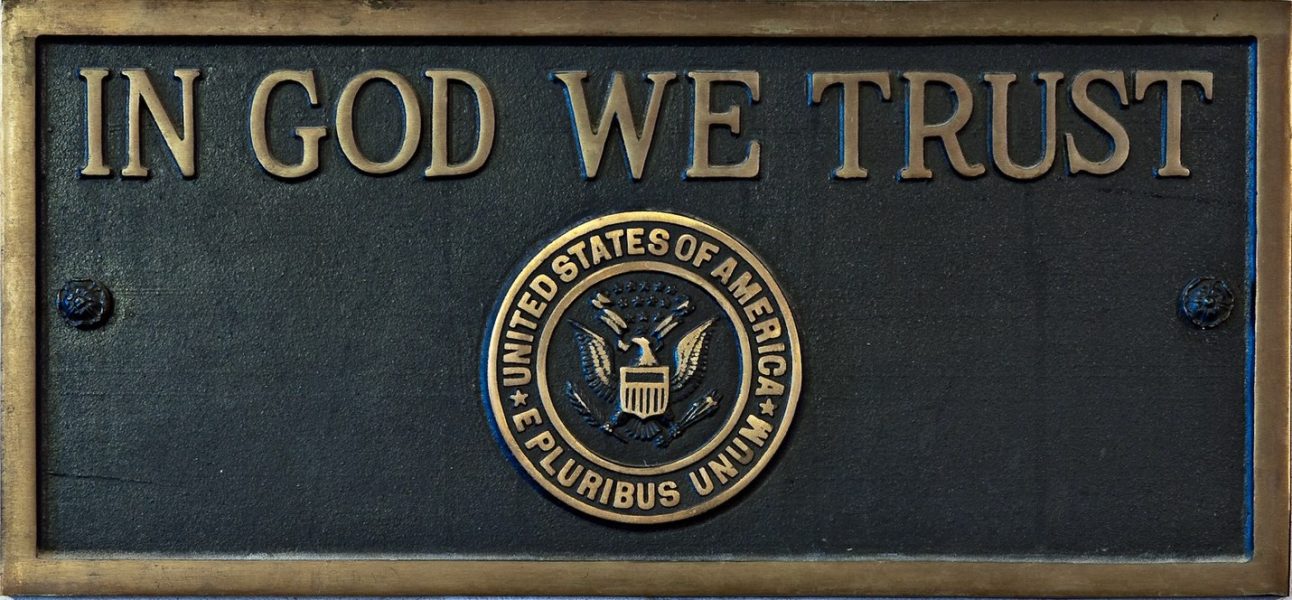
That is why we insist on saying “under God” in the pledge of allegiance and on writing “In God We Trust” on our coins, and why, despite an apparent secularist consensus, many still rightly debate whether we should consider ourselves, after all, a “Christian nation”.
As a constant witness today, the vibrant First Liberty Institute publicly expresses this American vision.
St. John Paul II, in a speech before the United Nations, said similarly: “religious freedom is the basis of all other freedoms and is inseparably linked to them”. This conviction ran through all his teachings against the culture of death and against “socialism,” understood as the denial of the transcendence and subjectivity of human society.
Or consider the idea that civil society itself, understood as a collection of families dedicated to worship, education, and common economic activities for collective flourishing, precedes the State.
This society, “the people,” as Lincoln called it, enjoys a “right to revolution.” It is free to change its entire form of government if that government is failing it: it has the authority to do so. This is what we believe and feel deeply as Americans.
It is true that the ideology of the social contract, as formulated by philosophers, has been individualistic and silent about the natural institutions of the family and the market. But in American culture, never purely dictated by “liberalism” —in movies, stories, and songs—, the figure of the father defending his wife, his children, and his home against a threat is more prominent than that of the loner.
And yet, a similar intuition underlies the spirit of social reform unleashed by the Rerum novarum and that later became evident in the Gaudium et spes of Vatican II:
A family, no less than a State, is… a true society, governed by an authority proper to it, that is, by the authority of the father. Therefore, as long as the limits prescribed by the very purposes for which it exists are not exceeded, the family has at least the same rights as the State in the choice and attainment of what is necessary for its preservation and its just liberty.
This vision of the family entails several consequences: “If citizens, if families, in associating and living together, experienced obstacles rather than help in a community, and saw their rights attacked rather than protected, society would rightly be an object of detestation rather than desire.”
It is evident that this vision, formulated by Pope Leo XIII in the words just quoted from the Rerum novarum, has been embraced much more intuitively by Americans than by Europeans.
There is also the spirit of innovation, invention, boldness, and entrepreneurship so evident in the American character: we are a country founded by people who took risks, and the “frontier” and our wilderness have always fostered courage.
This spirit is defamed when presented as individualistic, as mere “self-reliance” in the style of Emerson. The reason is that American boldness, from its origins, has been social: the Mayflower Compact; Benjamin Franklin’s famous and very true phrase (“We must, indeed, all hang together, or most assuredly we shall all hang separately”); and even the American history of citizens creating corporations with great enthusiasm.
When one hears the word corporation, one should not first think of publicly traded companies, but rather of any common undertaking, freely accepted among many people, that possesses a legal structure. European associations needed a royal privilege, or some other form of concession or participation in political power. They were formed from above.
But in the United States, citizens are presumed free to establish their own “social contracts,” so that, by their own will (though in a limited sphere), they may form legal personalities, which the State must recognize more than constitute. Our corporations are formed from below.
How many times, to foster a similar vision among the laity, does Vatican II use a word like “responsibility”? Its Decree on the Apostolate of the Laity, for example, speaks of:
“the unmistakable work that the Holy Spirit is doing today in making the laity ever more conscious of their own responsibility” (n. 1).
“Upon all Christians, therefore, rests the primary responsibility to work so that the divine message of salvation may be known and accepted by all men throughout the world” (n. 3).
“The apostolate in the social environment, that is, the effort to infuse the Christian spirit into the mentality, customs, laws, and structures of the community in which one lives, is a duty and responsibility so proper to the laity that it can never be adequately fulfilled by others” (n. 13).
My European friends were wondering, deep down, how an American Pope could bring this American spirit of faithful boldness to the Church. Which raises an interesting question: Are we facing an “American moment” for the universal Church?
About the author:
Michael Pakaluk, scholar of Aristotle and Ordinarius of the Pontifical Academy of St. Thomas Aquinas, is Professor of Political Economy at the Busch School of Business at The Catholic University of America. He lives in Hyattsville, MD, with his wife Catherine, also a professor at the Busch School, and their children. His collection of essays, The Shock of Holiness, will be published on August 25 by Ignatius Press. His book on Christian friendship, The Company We Keep, will be published this fall by Scepter Press. Both are available for preorder. He contributed to Natural Law: Five Views, published by Zondervan last May, and his most recent book on the Gospel came out with Regnery Gateway in March, Be Good Bankers: The Economic Interpretation of Matthew’s Gospel.