


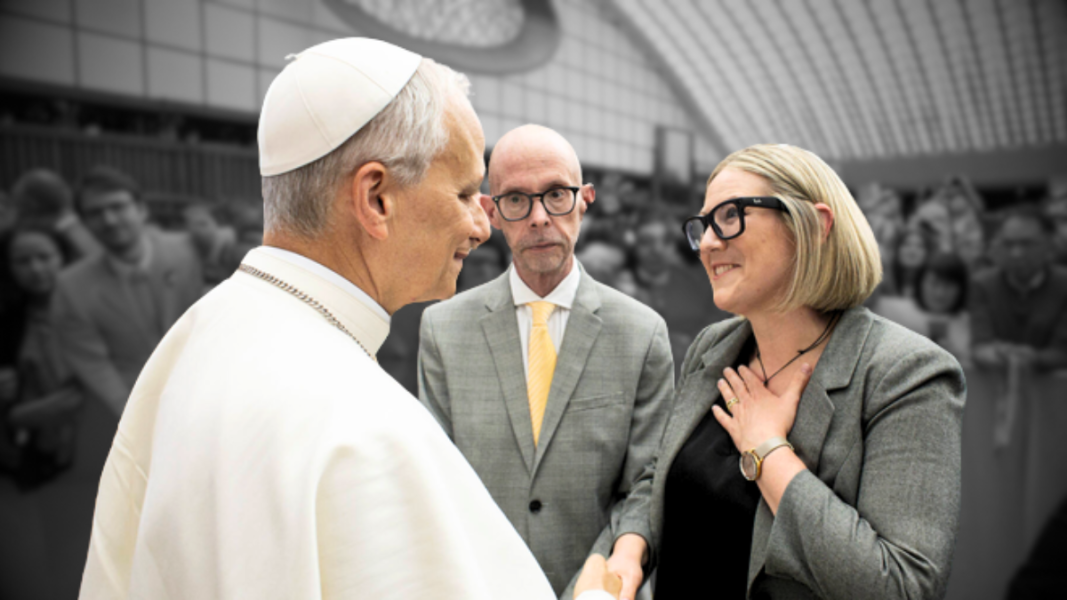
According to an article published by La Nuova Bussola Quotidiana, the recent biography of Leo XIV, which includes a long interview with the Pontiff and has sparked surprise and criticism among Catholics, questions both the timeliness of this publication and the way it was carried out, suggesting that the book with the interview with the Pope could have been avoided, why?
The Precedent of Francis and the “Confusion of the Interviews”
The Italian media outlet recalls that one of the most controversial aspects of Francis’s pontificate were his authorized interviews, which led to misunderstandings, controversies, and contradictions. Those interventions, especially those conducted with Eugenio Scalfari, became a “Magisterium of Confusion,” weakening the Pope’s figure and reducing him, according to the article, to just another “opinion maker.”
In contrast, Leo XIV had shown from the beginning a sober, measured, and careful style in his words, avoiding ambiguous or scandalous statements. Therefore, it is surprising that he has accepted to start his pontificate by participating in a biography book with an interview, something that seemed to stray from the path marked so far.
A Singular Biography with Many Questions
The volume, titled Leo XIV, Citizen of the World, Missionary of the 21st Century (Penguin), was written by American journalist Elise Ann Allen and presented in Peru, only in Spanish. It is the first book-interview with a Pope published in a single language and far from Rome, even though the original was in English. For the editorial, this choice is “curious and unprecedented,” difficult to justify solely as a homage to the country where the Pope was a missionary and bishop.
Additionally, it is emphasized that the Pope has not yet made key decisions on hot topics—LGBTQ, China, the Synod, the Vetus Ordo Mass, sexual abuses, canon law—and that it would have been more prudent to wait before embarking on an interview of this type.
The Weight of the Relationship with the Journalist
The editorial highlights that the choice of Allen as the author is not casual, as the journalist maintains a friendship with the Pontiff, born in the context of the fight against the Sodalitium Christianae Vitae (SCV), a Peruvian society of apostolic life dissolved by Francis after serious abuses were revealed.
Allen, moreover, was a member of the SCV until 2013, and this, according to the article, cannot fail to influence her narrative. The book devotes significant space to this case and to the accusations that brushed against then-Cardinal Robert Prevost, current prefect of the Dicastery for Bishops. The author defends that Prevost acted correctly, collecting the complaints, sending the victims to psychological counseling, and forwarding the documentation to Rome.
The text concludes that it will be necessary to check if the Pope’s commitment translates into facts, recalling that the scandal of the Rupnik case remains open as a crucial test of the Church’s credibility in this area.