


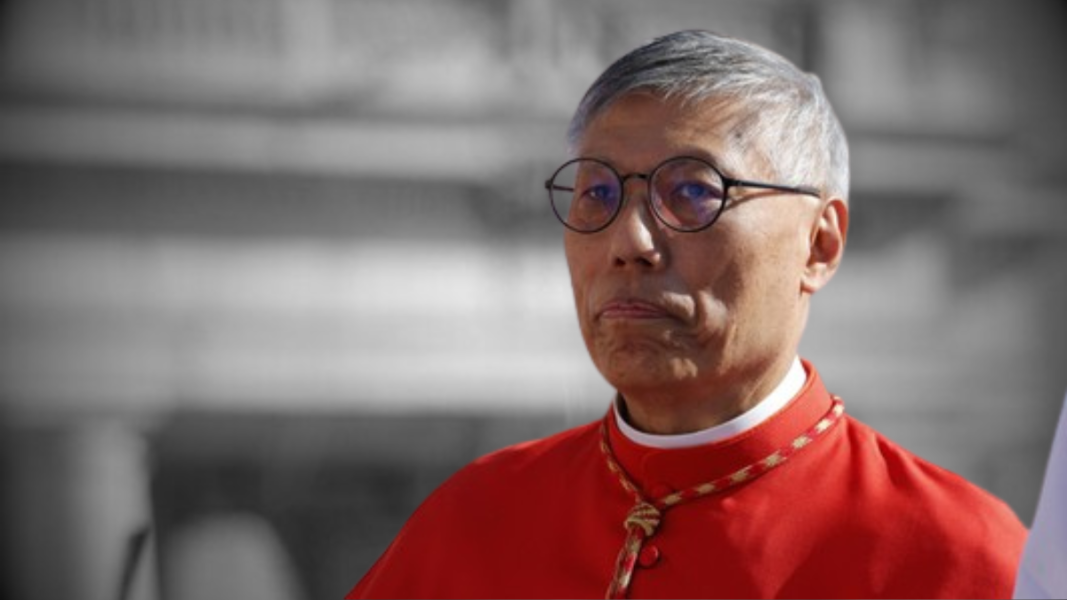
Cardinal Stephen Chow Sau-yan, Bishop of Hong Kong, has sparked strong controversy after publicly declaring that in the territory “there is no religious persecution” and that the Beijing government wishes to keep freedom of worship “intact.” His statements, reported by National Catholic Register, were made during a visit to the Australian Diocese of Parramatta, in a series of lectures organized by Bishop Vincent Long Văn Nguyễn. Chow even invited those present to travel to Hong Kong to check it personally, assuring that “China wants to preserve religious freedom intact because Hong Kong is important to it.”
Religious Persecution in Hong Kong: Cardinal Chow’s View Versus Reality
The cardinal’s words contrast with the reality denounced by numerous international observers, who point out that since the entry into force of the national security law in 2020 and new provisions in 2025, Church life has been subjected to severe limitations. Among them stands out the obligation imposed on priests to violate the sacramental seal if a supposed crime of treason is mentioned in confession, with penalties of up to 14 years in prison for non-compliance. Preachers have also been threatened with judicial proceedings for “seditious” homilies, and the curriculum of religious schools has been altered to include socialist values at the expense of Catholic teaching and the role of the Pope.
Cardinal Zen: Symbol of Harassment Against the Catholic Church in Hong Kong
Cardinal Chow also downplayed the situation of his predecessor, Cardinal Joseph Zen, 93 years old, who was convicted in 2022 for failing to register a fund to aid pro-democracy demonstrators in a trial considered by numerous experts as political and arbitrary. Chow stated that Zen “did not spend a single day in prison or under house arrest,” downplaying the harassment and silencing suffered by one of Asia’s most recognized Catholic leaders.
Jimmy Lai and Repression Against Pro-Democracy Catholics
In parallel, repression has reached lay figures. The Catholic businessman Jimmy Lai, founder of the pro-democracy newspaper Apple Daily, has been imprisoned since 2020 accused of conspiracy and collusion with foreign forces. His trial, lasting 156 days, concluded this year and an imminent verdict is expected. For many, his case symbolizes the erosion of civil and religious freedoms in Hong Kong under the control of the Chinese Communist Party.
International Criticism of the Hong Kong Cardinal’s Statements
Chow’s statements have received strong criticism. The sinologist Steven Mosher described his claims as “ridiculous,” recalling that Beijing had already breached the Sino-British agreement on Hong Kong long before the committed deadline. “The walls are closing slowly on the Church in Hong Kong, but they are closing,” he warned.
Analyst Nina Shea from the Hudson Institute pointed out that both Chow and Zen live under pressure from the regime and that authorities have gone so far as to threaten to close Catholic schools if Church leaders do not submit to the Party’s guidelines.
Catholic intellectual George Weigel criticized Cardinal Chow’s inaction regarding Jimmy Lai’s situation, lamenting that “he has done practically nothing to support the most famous Catholic prisoner of the 21st century or to accompany his family.” For Weigel, the prelate’s words and lack of action represent the profile of a negligent shepherd, in contrast to the example of St. Augustine in his sermon on pastors.
The Catholic Church in Hong Kong Under Pressure from the Communist Party
The situation in Hong Kong has left much of its ecclesiastical hierarchy tied hand and foot, unable to openly denounce persecution. This silence, analysts emphasize, makes it more necessary than ever for the Pope to raise his voice in defense of religious freedom. Meanwhile, Cardinal Chow’s words, far from providing clarity, have provoked indignation in a Catholic community that sees repression intensifying day by day.