


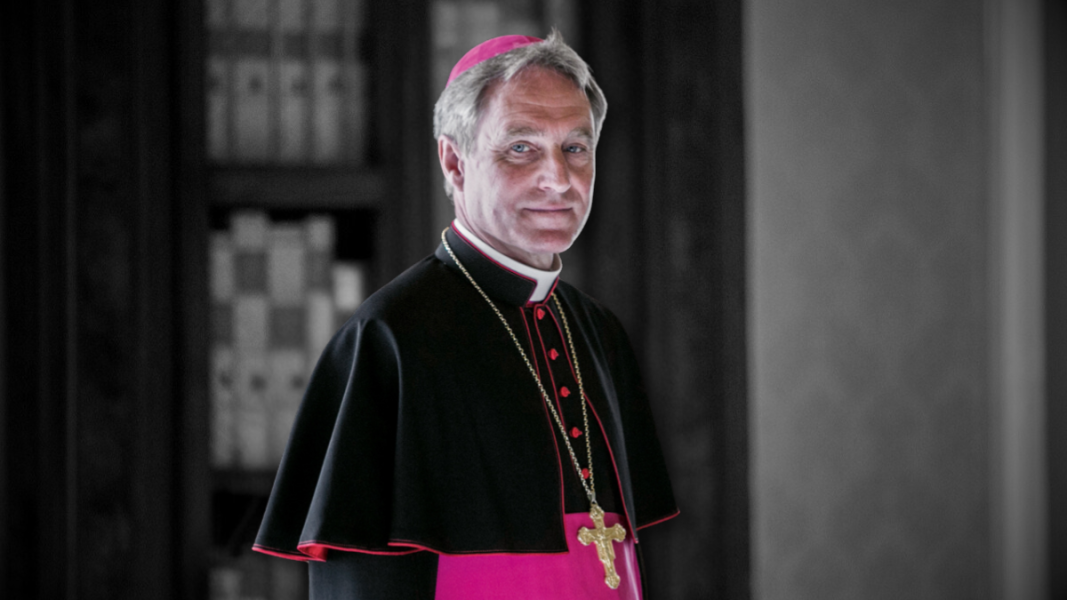
Archbishop Georg Gänswein, current apostolic nuncio in the Baltic countries and for years personal secretary to Benedict XVI, has come out in response to the criticisms launched in Germany against Pope Leo XIV following his first major pronouncement.
In statements to the Catholic magazine Die Tagespost, reported by katholisch.de, Gänswein emphasized that Leo XIV has recalled “fundamental Catholic truths,” confirming the definitive decision of St. John Paul II on the priesthood reserved to men and placing in its proper context the confusing document Fiducia supplicans from the Dicastery for the Doctrine of the Faith.
For Gänswein, these statements by the Pope “deserve respect and gratitude.” The attacks from Germany, which portray the Pontiff as an “enemy of reforms” for saying no to women’s ordinations and blessings of homosexual unions, are for him “nothing new and not very original,” a cliché repeated ad nauseam by progressive sectors that have been trying to pressure Rome for decades.
A gesture of openness regarding the Traditional Mass
The archbishop also highlighted Leo XIV’s initiative to convene a meeting between supporters and detractors of the Traditional Mass. For Gänswein, it is “a unique opportunity” to dismantle prejudices and overcome divisions that have sharpened in recent years.
The gesture, which contrasts with the restrictive line of the previous pontificate, reinforces the image of a Pope willing to listen and seek unity without renouncing the truth.
Germany insists on the “reformist cliché”
The background of these statements reflects the resistance of German progressivism to accepting the Church’s definitive teachings. Every time Rome reaffirms the impossibility of women’s priesthood or the incongruity of blessing unions contrary to Catholic morality, the criticisms from those who confuse doctrinal fidelity with “lack of reforms” are reactivated.
Leo XIV has made it clear from the beginning of his pontificate that he will not play double-talk or ambiguities. Gänswein, who firsthand knows the damage caused by years of relativism and confusion, has wanted to publicly support him on this point.
The diplomacy of peace and the wall of Moscow
The nuncio in Vilnius also referred to the Holy See’s efforts to mediate in the Ukraine war. He assured that the Pope’s outstretched hand has not been welcomed by Russia and that the success of any mediation depends on a sincere willingness from both parties, something that for now “does not exist in concrete reality.”
Nevertheless, Leo XIV’s commitment to peace is valued in the Baltic, where his words are perceived as moral support and a sign of solidarity with the victims of the conflict. Nothing is awaited with greater urgency than “reconciliation and peace.”