


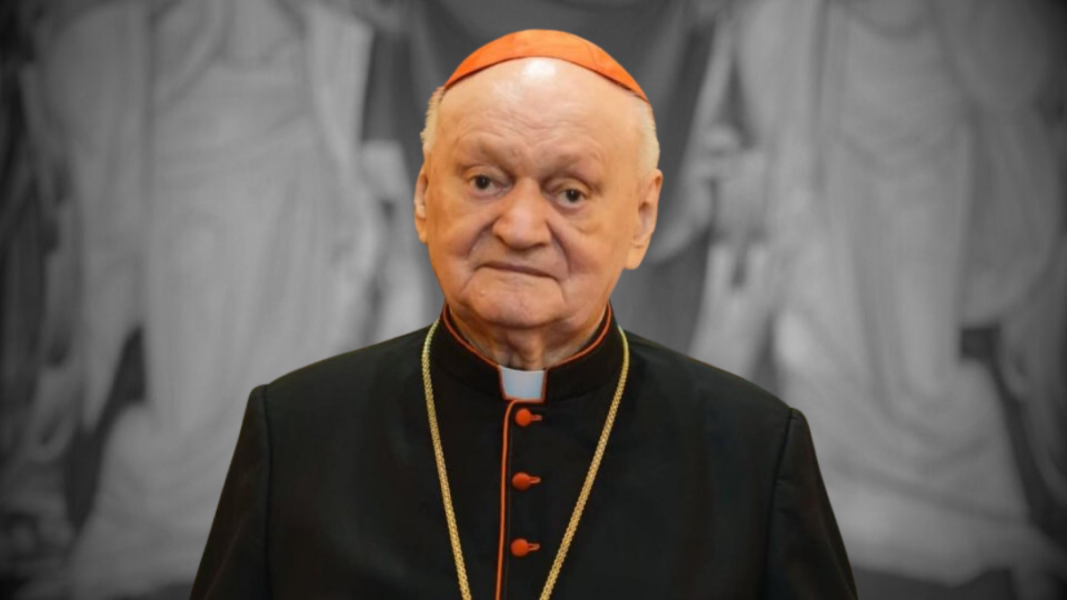
Cardinal Lucian Mureşan, Major Archbishop of the Romanian Greek-Catholic Church, passed away on September 25 in Blaj at the age of 94, according to Vatican News. Created a cardinal by Benedict XVI in 2012, Mureşan embodied throughout his life fidelity to Christ and the Church amid the harshest persecutions of the communist regime.
Born on May 23, 1931 in Transylvania, into a family with twelve children, he witnessed how in 1948 the communist regime banned the Greek-Catholic Church, forcing him to interrupt his studies and train as a carpenter while being watched by the police.
Priestly ordination in clandestinity
In 1964, after receiving an indult, he was secretly ordained a priest by Bishop Ioan Dragomir. For more than two decades, he exercised his ministry in clandestinity, serving especially the youth and keeping the faith alive in times of repression. After Dragomir’s death in 1986, he de facto assumed the hidden leadership of the Maramureş eparchy.
With the fall of communism, return to the light
The 1989 revolution allowed the Greek-Catholic Church to emerge from the catacombs. In 1990, St. John Paul II appointed him Bishop of Maramureş, and in 1994 he succeeded Cardinal Alexandru Todea as Metropolitan of Făgăraş and Alba Iulia.
In 2005, Benedict XVI elevated this metropolis to the dignity of a Major Archiepiscopal See, appointing Mureşan as its first Major Archbishop. For years, he had the difficult task of rebuilding the Church after decades of confiscations, returning temples to the faithful, and restoring the unity of a community hard-hit.
Service to the universal Church
In addition to guiding the Romanian Greek-Catholic Church, Mureşan served as president of the Romanian Episcopal Conference in various periods and, since 2012, as a cardinal of the Holy Roman Church with the title of San Atanasio. He also served on the Dicastery for the Eastern Churches, contributing his experience in fidelity during persecution.
Witness to forgiveness and reconciliation
In one of his last public messages, on the occasion of the commemoration of Blessed Cardinal Iuliu Hossu, he recalled how faith and friendship with God enabled forgiveness of the persecutors and maintained hope amid oppression. His life, from clandestinity to the cardinalate, is a testimony of Christian resistance in the face of totalitarianism.