


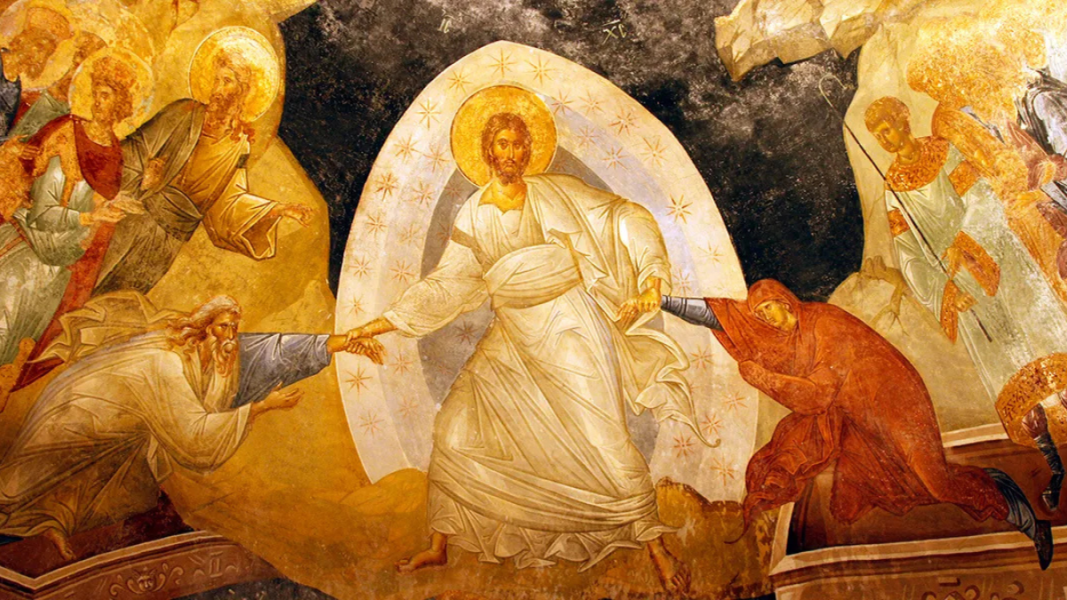
In one of his recent catecheses, the Pope stated: «Christ reaches us also in this abyss, crossing the doors of this Kingdom of Darkness. He enters, so to speak, into the very house of death to empty it. To free the inhabitants by taking them by the hand one by one. It is the humility of a God who does not stop before our sin, who is not frightened by the extreme rejection of the human being». The poetic force of these words is undeniable, but their formulation, read without theological precision, runs the serious risk of sowing confusion in a matter that the Church has always treated with extreme care.
The Catholic faith teaches that Christ descended “to the hells” after his death, but the meaning of that expression —descendit ad inferos— does not refer to the hell of the damned. In the biblical and patristic tradition, it designates the sheol or hades, the state of the dead in general, where the just of the Old Testament awaited, still deprived of the vision of God. There the Lord announced redemption and opened the doors of heaven. The Church teaches with equal clarity that the hell of eternal damnation is irrevocable and definitive: those who die rejecting God are not freed (cf. Catechism 1035; 633–635).
When the Pope speaks of “emptying the house of death” and freeing its inhabitants “one by one,” the image may suggest —if not qualified— that the damned are also rescued, which contradicts Catholic doctrine. It is true that his intention is catechetical: to emphasize the radical nature of Christ’s mercy, capable of reaching the deepest part of the human condition. However, the language chosen is objectively ambiguous. As it is expressed, it can feed the illusion of an automatic universal salvation, a doctrinal error always rejected by the Church.
It is worth recalling that in the medieval tradition, people spoke of the “hells” in the plural, encompassing distinct realities: the gehenna (eternal hell), the limbo of the just —where Christ rescued the saints of the Old Testament— and also purgatory, where souls are purified before entering glory. From this perspective, the papal image fits better if applied to purgatory: that “taking by the hand one by one” accurately describes the purifying process of those who are already saved but still need to be freed from their attachments. Applying it to the hell of the damned, on the other hand, is theologically impossible.
Christ’s descent to the hells is, in short, a truth of faith that must be proclaimed with all its richness, but also with the clarity that avoids ambiguities. Christ does not “empty” the hell of the damned: he opens heaven to the just who awaited redemption. His mercy is infinite in the offer, but it does not annul human freedom or the drama of mortal sin. What catechesis does not need are ambiguous expressions that obscure doctrine and leave the faithful people at the mercy of erroneous interpretations.