


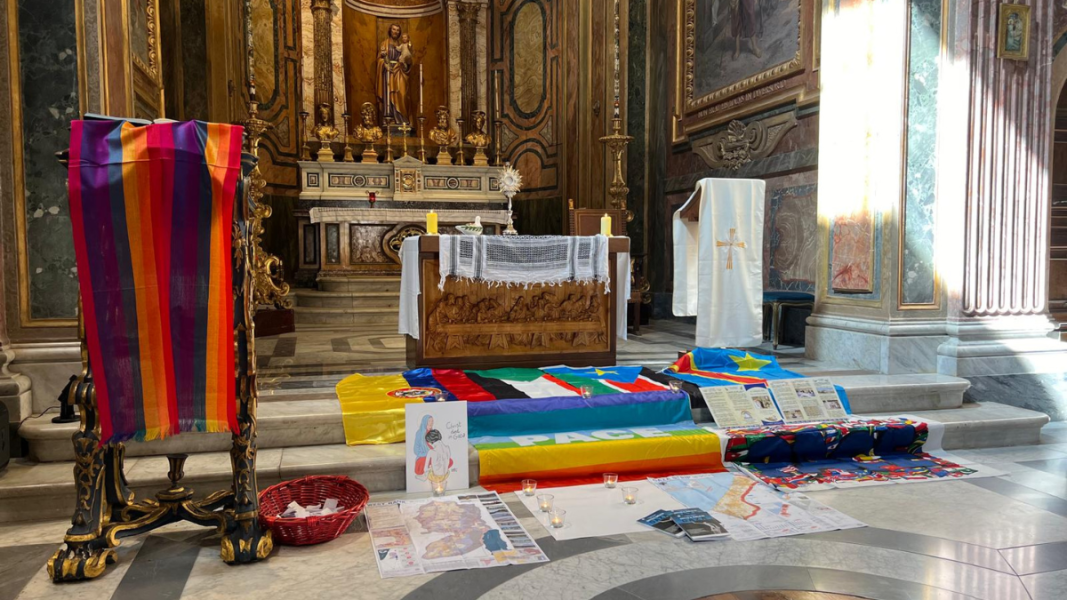
In Rome, the Pope’s diocese, a serious episode of liturgical abuse has occurred during an event convened by the Vicarate of Rome in the church of San Giuseppe dei Falegnami, in the Roman Forum.
The event, announced as a “continuous prayer for peace in Gaza and the Holy Land”, began on September 22 and concludes today, September 25. The disseminated images show that during the exposition of the Most Blessed Sacrament, the monstrance was placed on a Palestinian keffiyeh and surrounded by objects foreign to Catholic worship.
An altar turned into a political stage
Next to the altar, rainbow flags were placed—presented as symbols of “peace,” but also associated with LGBT activism—, political claim banners, and other profane objects.
In the ambo, the seat was even covered with a multicolored cloth, while on the floor there were maps, posters, and materials that have nothing to do with Eucharistic adoration.
Why it is a liturgical abuse
The Church’s norms are clear: the monstrance or ciborium must be placed on the corporal, the altar, or an approved liturgical cloth. This is indicated by the instruction Redemptionis Sacramentum in no. 169, which prohibits introducing elements foreign to Eucharistic worship.
Furthermore, the Code of Canon Law in canon 1367 establishes severe penalties for acts that constitute irreverence toward the Most Blessed Sacrament. Although the canon strictly refers to profanations, theologians and canonists agree that placing the Eucharist on objects of a political or profane nature constitutes an offense to its dignity.
The gravity of it occurring in Rome
What happened takes on even greater gravity because it is not an isolated case in a remote parish, but an event organized in the Pope’s diocese and promoted by organisms of the Vicarate of Rome itself.
That in the heart of the Church such tolerance—and promotion—of an exposition of the Most Blessed Sacrament in this manner constitutes a cause of scandal for the faithful, who expect from Rome an example of reverence, fidelity, and care toward the Real Presence of Christ in the Eucharist.