


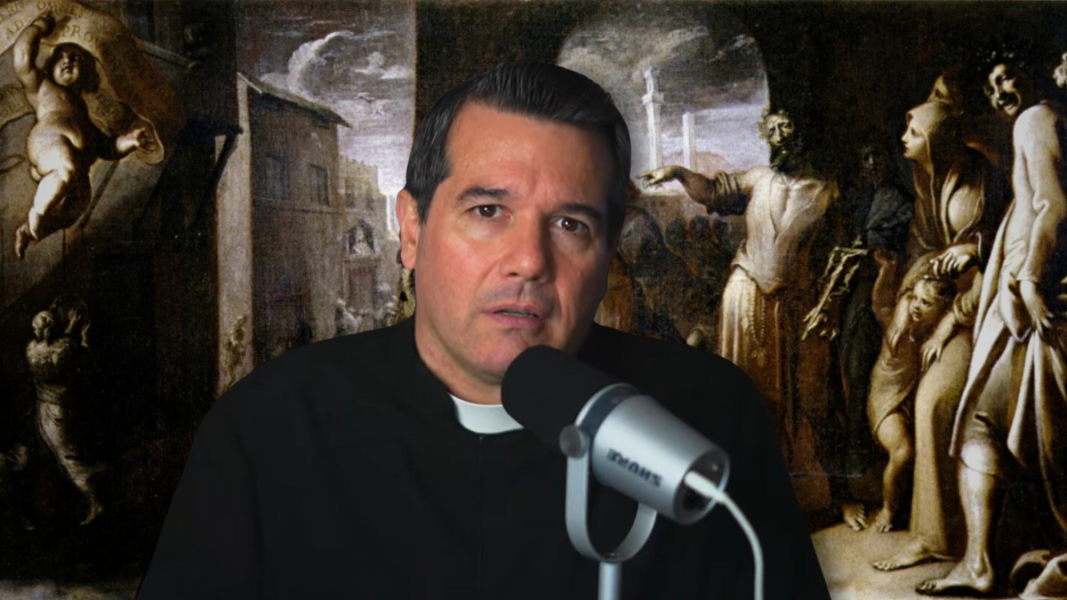
In one of the latest posts on the channel «Que no te la cuenten», Father Javier Olivera makes an interesting reflection on silence and denunciation, prudence and justice, in relation to the latest scandals experienced by the Spanish church in Toledo and Madrid, cases that we have extensively covered on Infovaticana.
Remember that in the history of the Church similar things have happened, and even worse, and that public denunciation is necessary, as in the case of the Sack of Rome in 1527, during the pontificate of Clement VII, who had allied with the Muslims because he was at war with Charles V, when the penitent Brandano de Petroio publicly rebuked the Pope accusing him of sin and prophesying the destruction of Rome:
“Bastard sodomite, repent, because for your sins Rome will be destroyed in 14 days”.
The personal sins of those in authority affect the entire Church and the People of God have the right to demand holiness from their pastors. In the cases of Madrid and Toledo the true scandal is not only in the personal fall of the priests, but in supporting clerics in positions of responsibility despite serious public facts.
The Magisterium on Vocations
The 2005 Instruction of the Congregation for Catholic Education, published under Benedict XVI, which establishes that those who practice behaviors contrary to sexual morality, who have deeply rooted tendencies in that area, or who support a culture contrary to the Gospel cannot be admitted to the seminary or to holy orders.
In the light of such teachings this Dicastery, in agreement with the Congregation for Divine Worship and the Discipline of the Sacraments, believes it necessary to affirm clearly that the Church, deeply respecting the persons in question, cannot admit to the Seminary and to Holy Orders those who practice homosexuality, present deeply rooted homosexual tendencies, or support the so-called gay culture.
Such persons, in fact, find themselves in a situation that gravely hinders a correct relationship with men and women. In no way can the negative consequences that can derive from the Ordination of persons with deeply rooted homosexual tendencies be ignored.
Denunciation and Evangelical Correction
According to the Gospel, he explained, the steps to address these situations are: private fraternal correction, then with witnesses, then go to the bishop and, if there is no response, make it public for the whole Church. In his opinion, remaining silent in the face of public facts makes one complicit by silence.
Defending the Faithful Majority
The priest insisted that the immense majority of the clergy in Spain and in the world lives faithfully their ministry. Making these cases visible, he added, defends the dignity of the priesthood and protects the good name of those who daily dedicate themselves to the service of the People of God.
In addition, he recommends reflecting with the Sermon on the Shepherds No. 46 by St. Augustine, a text that is meditated on in the office of reading just these days. To conclude, Olivera reminds us that:
Speaking the truth with prudence and charity is a duty of every pastor and a way to safeguard the holiness of the Church, which does not depend on the personal virtue of its members, but on Christ himself.