


An Ordinary Faithful
Necessary Preamble: A Word Born of Pain
The following pages are not an exercise in cold or distant criticism. The reality is that they are born from the pain and sadness of seeing how a work that was fruitful for the diocese and for so many vocations has been disfigured and practically destroyed. Nor is it a matter of resentment, but of responsibility: what is happening with our seminary must be known; the evil seems to have been done with premeditation.
At the beginning of his governance, the bishop of San Luis, Mons. Gabriel B. Barba, presented himself as a “father” willing to listen, accompany, and care for the heart of the diocese: its seminary. Over time, however, the facts showed the opposite. He who had proclaimed himself a shepherd revealed himself as a wolf that scatters the flock, undermining trust, breaking the community, and leaving deep wounds in those who had given their lives to God’s call.
I repeat, bearing witness to this is painful, but necessary. Only by bringing to light the path of decay and manipulation can the truth of what was a seedbed of holiness and fruitfulness for the entire Church one day be recovered.
The Origin of a Fruitful Work
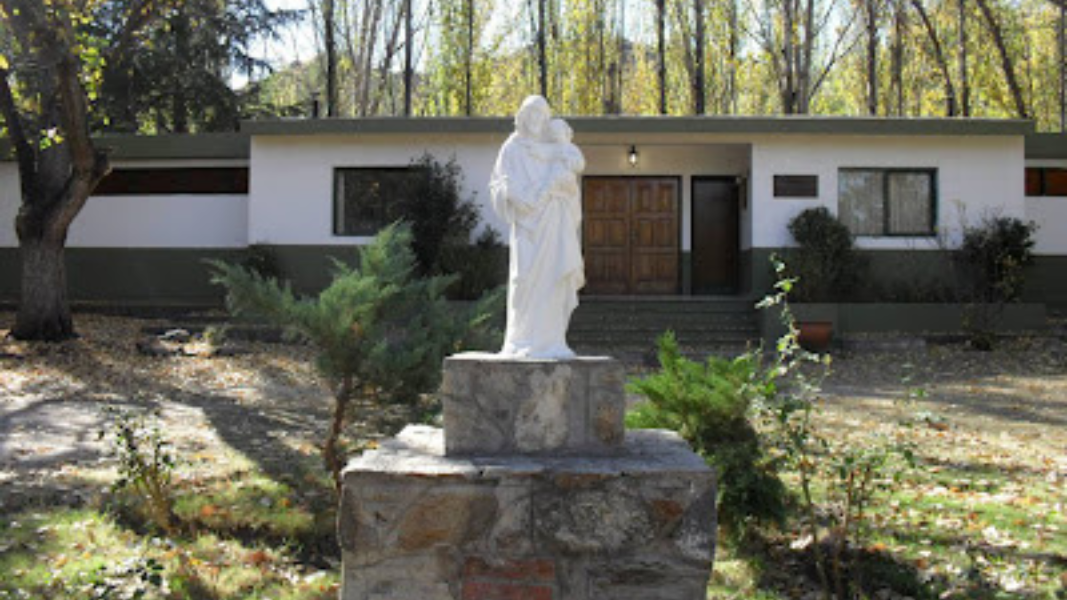
The diocese of San Luis did not have its own seminary until the arrival of Mons. Juan Rodolfo Laise (1971). Under his impetus, the Seminario San Miguel Arcángel was founded, initially in a temporary location and later moved to El Volcán in 1982. With this gesture, Laise not only provided the young diocese (1934, Pius XI) with its own house of formation, but also laid the foundations for a true vocational renaissance: many young people from the province and, for the most part, from neighboring provinces could be trained under the spiritual and pastoral imprint of the bishop and his collaborators.
Thanks to this strategic decision, San Luis became one of the dioceses with the highest proportion of priests relative to its population, a phenomenon that aroused interest even outside Argentina. The seminary, with its stable way of life, clear discipline, and careful selection of formators, became a reference for vocational fruitfulness in the country, one of the few solid seminaries in Argentina.
A Turn in the Course
The panorama changed with the assumption of Mons. Gabriel Barba1. Under his governance, the seminary began a process of progressive dilution. The signs of this transformation, or rather, deformation, can be enumerated, although not exhaustively, as follows:
- The removal of good formators—priests, laity, and religious—replaced by “formators” external to the bishop’s progressive line;
- the appointment of a rector lacking sufficient formation, but malleable to ideological guidelines;
- undue interference in the conscience of the seminarians;
- the suggestion to avoid contact with ecclesial groups or movements of Catholic profile (because progressivism is not Catholic, it is a heresy);
- the displacement of intellectual and spiritual formation in favor of disordered apostolates (on social media, for example), which prevented the stability necessary to mature the vocation.
This set of measures led to a climate of disorientation and vocational weariness. What was once a seedbed became a terrain of dispersion. The result is evident: the seminary, which for decades had dozens of seminarians, today has barely three (all admitted before the current government) and they are in “theology.” In a few years, there will be only three ordinations—if there are any—and then, for at least a decade, none. Something was done wrong.
Let us move forward. With the arrival of the new episcopal stage, the seminary began a turn that undermined its roots. From the beginning, mistreatment and indifference toward those who had sustained the work were perceived: a long time passed before the new bishop met with the formators, and when he did, he did not give them the floor nor consult them about the seminary and its future, but limited himself to saying that it was “beautiful to have a seminary” and that he did not plan to introduce changes. However, what happened afterward was exactly the opposite: by order of the bishop, the new rector communicated to all the formators that they were relieved of the task and the formation plan was restructured.
Thus, priests, religious, and laity of long trajectory were set aside and replaced by more malleable profiles, even with external or virtual accompaniments, lacking experience in priestly formation. And when we say “lacking experience in formation,” it is not just a matter of lack of years in the task; in practice, they did not form: they only instructed in matters useful for a “pastoral of the peripheries,” without true cultivation of the intelligence or the spirit. The seminary thus ceased to be an integral school of life and doctrine, to become a space for functional training, incapable of forging the interior depth that the priesthood demands.
A clear example, which paints the full picture of that lack of vision, is the elimination of Metaphysics—the cornerstone of philosophy and theology—as a subject in the curriculum; and in its place, areas of communication and pastoral were included. With this, the intellectual rigor that should sustain the entire formation was lost, replaced by secondary contents that distract more than they build. The new priests will be very capable of “communicating,” perhaps they will be YouTubers or Instagrammers, but they will not know how to think.
Discipline—which is indispensable for forming the will—was another of the things that was modified and relaxed until it almost disappeared. In the first year of the new rector’s management, discipline practically did not exist: the environment was chaos, a lack of control, to the point that they later had to make an emergency swerve to avoid a greater mess. To this was added the unrestricted use of cell phones and the possibility of entering and leaving the seminary without asking for authorization: almost a hotel; they were only required to attend class. There was also, at that time, a group of newly admitted seminarians who opened social media accounts (Instagram) to promote seminary life. That effort to show a public image, typical of a superficial culture, did it not replace, in many moments, the intimate and essential task of formation? That account stopped working… due to lack of seminarians to manage it.
The historic name of the house was also changed. Although the new title honors St. Joseph, replacing “San Miguel Arcángel” was symbolic: when one wants to erase a tradition, one begins with the name. To this was added the move from El Volcán to the former Benedictine monastery of El Suyuque, a gesture that, beyond the practical, disconnected the seminary from its vocational memory, trying to “reset” its identity.
In general, these decisions show not only a different practice of government, but a will to break with the formative memory that had sustained the diocese.
The Contrast with the Magisterium
The crisis of the San Luis Seminary cannot be analyzed in isolation: it must be placed in the light of what the Church has taught about the importance of seminaries. Here we leave the central ideas of some documents:
- Vatican II, Optatam totius, recalls that the renewal of the Church depends to a great extent on priestly formation and demands formators “from among the best,” with solid doctrine and proven virtue.
- St. John Paul II, Pastores dabo vobis, emphasizes that the seminary must configure the future priest with Christ, in a balance of human, spiritual, intellectual, and pastoral formation.
- The Ratio Fundamentalis (2016) insists on the need for an integral itinerary, real community, close accompaniment, and respect for the conscience of candidates.
- Pius XI, Ad catholici sacerdotii (1935) warned that the greatness of the priesthood demands the utmost seriousness in its preparation.
In the light of these documents, what happened in San Luis shows an inverse path:
- the formation team is weakened, instead of strengthened;
- a disordered pastoral activism is introduced that hinders integral formation;
- the unity of the seminarian’s life is affected by subjecting him to ideological or media conditioning;
- the historical continuity of a fruitful seminary is broken, replacing it with a diffuse and rootless project.
Testimonies from Within
Various voices agree in pointing out how the climate of control and manipulation deeply affected daily life in the seminary. The accounts highlight:
- Forced isolation: contact with seminarians who had been expelled or who had withdrawn was prohibited, and even with priests of the local presbytery, under the idea that none accompanied the bishop.
- Violation of the internal forum: the rector publicly exposed written judgments of former formators about seminarians, forcing the revelation of intimate aspects of the conscience, in open contradiction with due confidentiality.
- Control systems: structures like the “triad” and the “vedeles” maintained strict surveillance over daily life, generating a climate of distrust.
- Undignified language and treatment: the rector addressed the seminarians with vulgar expressions and, at times, with a humiliating style, improper for a vocational process.
- Manipulation and discard: seminarians initially favored were later marginalized or humiliated, treated as instruments and then discarded.
- Outbursts of anger: numerous young people reported explosions of anger from the rector, with shouts and verbal aggressions that negatively marked coexistence.
The reality, far from generating a healthy environment, was the establishment of a climate of manipulation and mistreatment that ended up suffocating vocational life. It is no coincidence that many agree in stating that, in any other place and far from the figure who exercised—and currently exercises—the rectorship, the seminarians will be better off.
Other testimonies also point out that this year, amid the secrecy surrounding the seminary, a young man entered who, after a brief stay in El Suyuque, was quickly sent to another diocese. This fact apparently led to the unofficial decision to close the seminary and disperse the three seminarians plus the one who entered. The continuity and community that had sustained vocational formation for decades were interrupted.
It is also known that the three seminarians in “theology”—who had entered before the change of rector—remain “on tour,” transferred one to a parish in the diocese and the other two to Córdoba, without their current situation being clear. The general perception is that this dispersion, far from responding to pastoral or formative needs, reflects a pattern of dismantling the seminary, weakening community life and seriously affecting the stability of those aspiring to the priestly vocation.
Conclusion: A Seminary Left to Die
Our seminary has not died suddenly, but by inanition: it is deprived of the best formators, continuity is taken away, candidates are dispersed in secondary tasks, discipline is weakened, memory is lost. All this has happened in San Luis under the tutelage of Mons. Barba.
Where Mons. Laise knew how to erect a bulwark of vocations, today we find an anemic seminary, reduced to a handful of young people who entered in more stable times. The consequence is not minor: a diocese with fewer vocations becomes dependent, ages, and loses evangelizing capacity. The contrast between Laise’s legacy and the current management (and we use management because it seems like a business) should serve as a warning: when fidelity to the Magisterium in formation is abandoned, vocations die, and with them the entire local Church is impoverished.
The pontiffs have tirelessly repeated that the seminary is the heart of the diocese and the bishop is the first responsible for this task, for in the care and fruitfulness of the seminary the authenticity of his shepherding is measured. If that heart stops beating strongly, the entire diocesan life suffers. A flourishing seminary is a sign of living faith; there it is reflected, as in a mirror, the spiritual and pastoral vitality of the entire local Church. An agonizing seminary reveals the spiritual drought of the community.
In San Luis, however, with the arrival of Mons. Barba, this sign of life faded: what had flourished with effort and sacrifice was left to die by abandonment and deformation. Thus, what should have been a source of hope for the entire diocese became a desert, revealing with crudeness the infidelity of a shepherd to the mission entrusted to him. Episcopal acedia—that sadness for spiritual goods that are no longer desired to be reached—translates into malice and destruction of what others built with fidelity. “Mercy” and “openness” are invoked, but in practice, tyrannical regimes are imposed that suffocate vocations and empty ecclesial life of content.
However, not everything is lost. History teaches that God knows how to raise new life even in the darkest moments. Today is a time to pray more strongly for vocations, for our seminary, and for the conversion of the heart of our pastor. Let us also ask for ourselves, so that so much pain and suffering, so much mistreatment and indifference, does not harden our hearts.
Trusting in the intercession of the Virgin and of St. Michael the Archangel, we ask that the heart of our diocese beat strongly again and that holy pastors who guide the People of God may never be lacking.
CRISTO VENCE!
QUIS UT DEUS?
Publicado originalmente en: Peregrino de lo absoluto.