


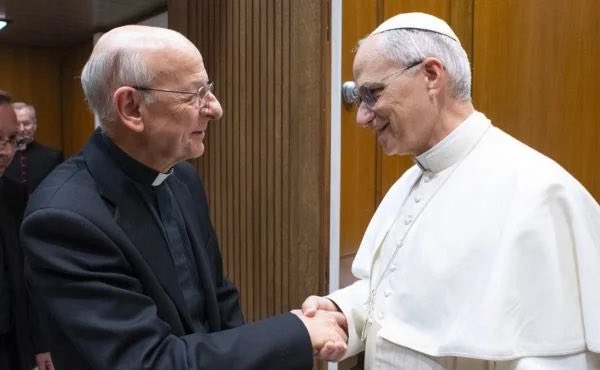
Leo XIV and the Opus Dei Mirage
The recently published authorized biography of Leo XIV –and it is worth emphasizing, authorized, reviewed, and accepted by the Pope himself– has come to set the record straight on an issue that the Opus Dei has tried to manipulate since May 8: the supposed love story between Robert Prevost and the Work during his years in Chiclayo.
For months, the Opus’s official narrative has sought to present Prevost’s relationship with Chiclayo as a kind of spiritual idyll, a perfect romance between a young and dynamic bishop and the spirituality of Escrivá’s followers. A saccharine tale, conveniently sweetened, designed to showcase closeness and complicity. The problem is that it was not true.
The End of the Myth
The biography, being authorized, reflects what Leo has wanted to be recorded for posterity. And there is the decisive fact: there is no trace of that idyll. Quite the contrary: what the text shows is distance, prudence, and, in many moments, open distrust toward the way the Opus tried to influence the diocese of Chiclayo.
The artificial romanticism that the Work has wanted to sell is thus unmasked. There was no honeymoon or connivance, but a tense relationship, marked by Prevost’s discomfort with the intrusion and rigidity of those who sought to colonize ecclesial life under their corporate seal.
Moreover, it is suggestive to see how many priests from the Holy Cross abandoned their formation and circles upon Prevost’s arrival in the diocese, to curry favor with the new bishop.
What is truly significant is that Leo XIV has wanted to authorize this version. He could have silenced the matter or left it in the ambiguity that always favors the Opus. Instead, he has preferred that the truth be recorded: that his experience with the Work was not one of enthusiasm, but of caution and justified wariness.
And it makes sense. The Opus Dei, accustomed to operating as a parallel power within the Church, has clashed time and again with bishops who do not accept tutelage or external agendas. Prevost, trained in a different spiritual school and with a different sense of pastoral authority, could not allow himself to be dragged along by a machine that feeds on unconditional loyalties.
A Necessary Correction
The result is clear: the biography becomes a correction to the official narrative of the Opus Dei, which is portrayed in its effort to appropriate figures and stories that do not belong to it. The Work wanted to write a romantic novel around Chiclayo and Prevost, but Leo XIV himself has given the order to publish the real version: without idylls, without sweeteners, without manipulations.
And his decision to authorize this account is, in itself, a statement of principles: he distrusted the Opus Dei, and perhaps he was right to do so.