


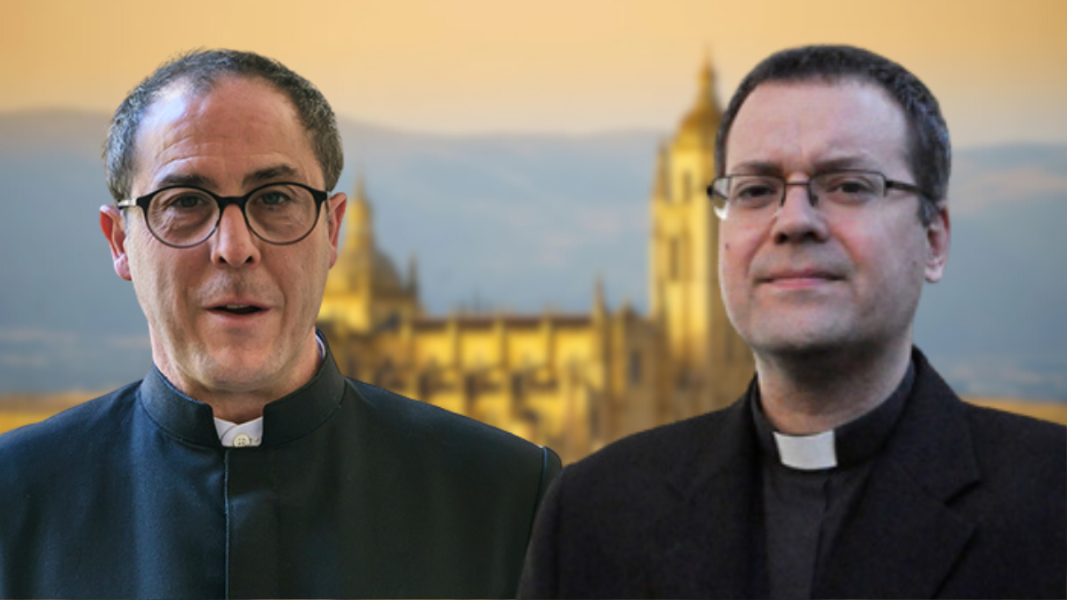
On July 23, El Plural exclusively published an internal complaint that pointed to the dean of the Segovia Cathedral, Rafael de Arcos Extremera, for orchestrating an alleged scheme of off-the-books payments, misappropriation of donations, and workplace harassment.
According to documents and testimonies, workers at the Casa de la Espiritualidad San Frutos would have paid hidden rents in the form of “donations” without contracts or invoices. Additionally, extra pay delivered in “envelopes” for overtime hours was reported, along with a toxic work environment that, according to sources, led to serious mental health problems in some employees, documented in clinical reports.
The dean categorically denied these accusations to El Plural, stating that everything stems from a movement “against him” and that the accounts are clear and transparent. At that time, an internal investigation into the case was opened to clarify what happened.
The diocese’s absolution
After weeks of silence, on September 16, the Diócesis de Segovia issued an official statement announcing the results of an internal investigation conducted by its Criminal Compliance System.
According to the note, no “criminal conduct or serious infractions” were found in the management of the Cabildo or in the dean’s conduct. The report assures that the treatment of workers was “correct and respectful” and that all funds reviewed were “properly accounted for and allocated to purposes inherent to the Church.”
The statement also noted that some “formal aspects subject to improvement” were identified, for which corrective measures were proposed aimed at strengthening transparency. With this, the Bishopric sought to close the matter by reaffirming its commitment to ethics and legality.
During the investigation, no further accusations were made public beyond the information with which the case had begun.
The victims’ plea
However, just one day later, Religión Digital published, on September 17, an open letter from one of the complainants addressed to the Bishop of Segovia, Jesús Vidal Chamorro.
In the letter, the Cathedral worker accuses the Cabildo of having set up a “tailored” investigation without listening to the victims:
“How can it be called an internal investigation when those who suffered the facts are deliberately ignored? By excluding me, they have shielded a prefabricated narrative, where the accused become judges of themselves.”
The letter denounces that the process was limited to interviews with employees dependent on the dean, that ambiguous reports were used, and that no concrete explanations were given about the facts revealed by El Plural, such as the off-the-books payments or the concealment of rents under the formula of donations.
The complainant adds that he provided audios, documents, and evidence of alleged harassment, irregularities in contracts, and manipulation of reviews—evidence that he provides in yesterday’s publication—but that none of this was considered in the official investigation. “What has been disseminated is a farce designed to smother criticism, not to clarify the truth,” he concludes.
Member of the Dicastery for the Clergy
On August 28, 2025, Jesús Vidal Chamorro was appointed a member of the Dicastery for the Clergy, an office that, among other functions, is responsible for the training of priests and seminarians, and contributes to the supervision of the conduct of clergy members.
That Mons. Vidal holds positions of growing responsibility in the national and international Church is significant. However, allowing or tolerating—even apparently—denounced situations of lack of transparency, workplace harassment, or opaque management under his jurisdiction constitutes a serious risk to the credibility and competence of his functions.
Transparency or cover-up
While the Bishopric assures that everything is in order, the victim claims that he was never heard and that the investigation was a mere formality to extinguish the scandal. What is certain is that a Church that proclaims the truth cannot afford to ignore those who denounce abuses or corruption.
For the moment, a more clarifying response is expected from the Diocese of Segovia, because if a transparent investigation is not conducted, with guarantees and giving real voice to the victims, the suspicion of cover-up will continue to damage the trust of the faithful.