


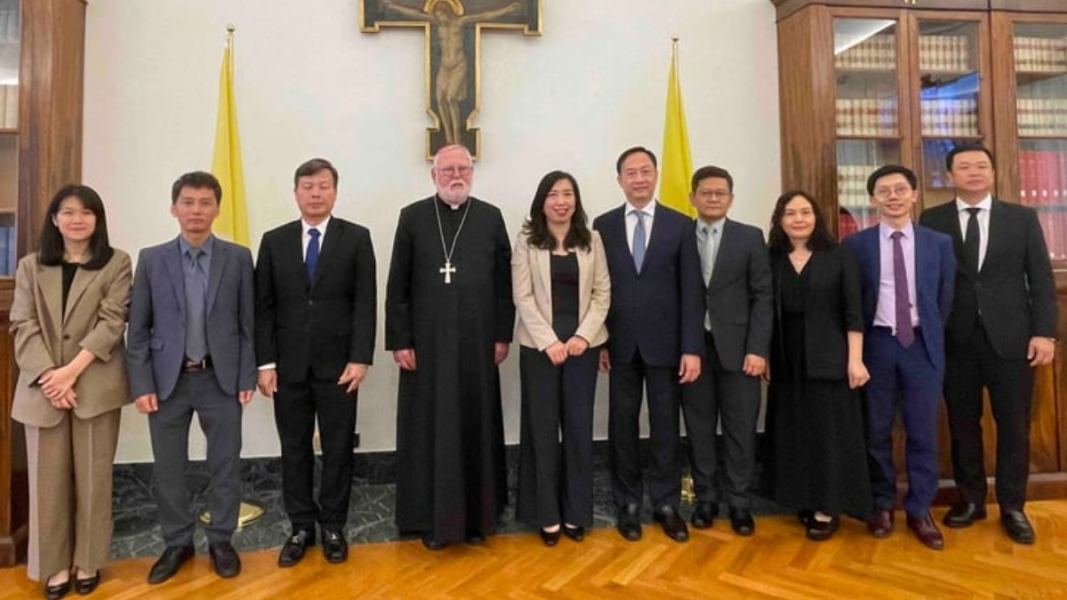
On September 12, 2025, the XII meeting of the Joint Working Group between Vietnam and the Holy See was held in the Vatican, during which both delegations engaged in in-depth dialogue on existing diplomatic relations and the situation of the Catholic Church in Vietnam. This was announced in the joint communiqué issued on September 13, which highlights that the meeting took place “in an atmosphere of friendship, trust, and mutual respect.” The Vietnamese delegation was led by Le Thi Thu Hang, Deputy Minister of Foreign Affairs, while the Holy See was represented by Mons. Mirosław Wachowski, Undersecretary for Relations with States.
Mutual Recognition and Concrete Actions
According to the joint communiqué, both parties recognized the positive contributions that the Catholic Church has made to Vietnam’s overall development, emphasizing the commitment of the faithful to live the Gospel as responsible citizens. Progress in bilateral relations since the previous meeting, held in Hanoi in May 2024, was also highlighted, thanks to dialogue, periodic consultations, delegation exchanges, and particularly the role of the papal resident representative in Hanoi, Archbishop Marek Zalewski.
Meetings and Institutional Implications
During their visit to the Vatican, the Vietnamese delegation was received by Pope Leo XIV and made protocol visits to the Secretariat of State, headed by Cardinal Pietro Parolin, and to the Secretary for Relations with States and International Organizations, Archbishop Paul Gallagher. The explicit commitment of both parties is to continue holding periodic meetings of the Joint Working Group and to promote high-level exchanges as a means to further strengthen diplomatic and pastoral ties between Vietnam and the Holy See.
The Working Group between Vietnam and the Holy See
The XII meeting of the Vietnam–Holy See Joint Group represents a clear step toward consolidating relations based on mutual dialogue and recognition of the Catholic Church as an important actor in Vietnamese national life. The authorities involved agree that trust and institutional cooperation are fundamental to advancing religious rights, freedom of worship, and service to the Catholic community within a framework of state respect.