


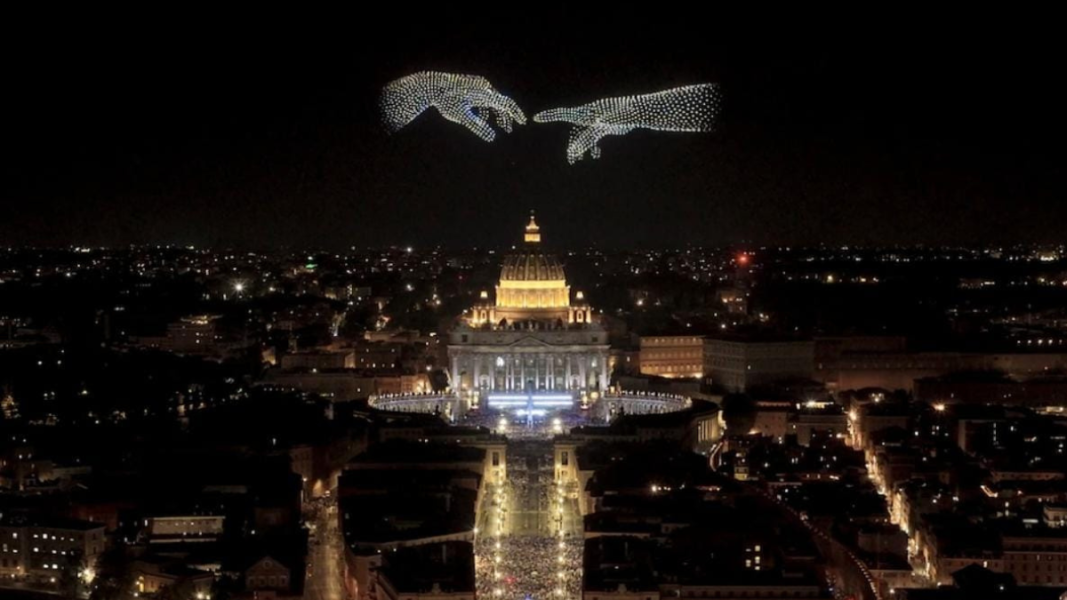
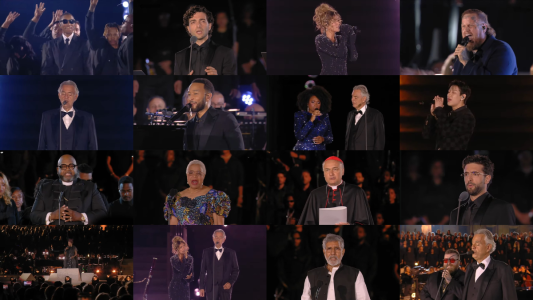
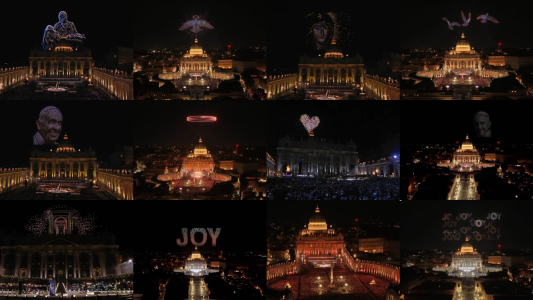
Especially moving moments were the performance of the Ave Maria in Latin, while drones traced images of Jesus and Mary in the sky against the backdrop of St. Peter’s Basilica, and the shared version of Amazing Grace. Even artists known for styles far from the sacred addressed the experience of faith with sincerity: Karol G spoke about how God helped her heal and her need for divine support; Clipse sang about the pain of losing their parents and the faith necessary to face it.
The deployment of 3,500 drones impressed with its technical magnitude and symbolism, drawing not only faces and religious symbols but also transmitting a spiritual message in perfect sync with the music. The centrality of Christ was reinforced by the participation of a cardinal and a priest who offered brief interventions, marking the difference from a purely cultural spectacle.
Although not all the artists present are references in Christian life, the general tone was one of respect and reverence, turning the evening into a proclamation of the Gospel to millions of people live and through the broadcast. For some critics, the tension may remain about to what extent the Church should rely on modern cultural languages, but the truth is that that night St. Peter’s was the stage for massive evangelization: two hours of praise to God from voices that usually resonate in other settings.