


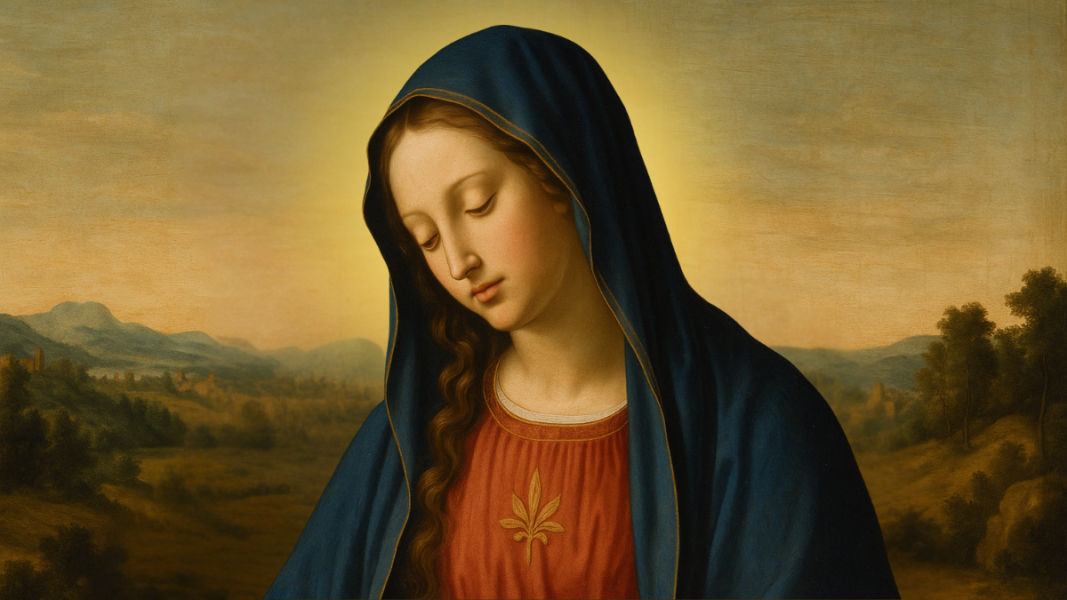
Every September 12, the Church celebrates the feast of the Holy Name of Mary, a memorial instituted by Pope Innocent XI in 1683 following the decisive Christian victory in the Battle of Vienna. That historical event marked a turning point for Europe, which was then threatened by Ottoman expansionism.
The Catholic army, led by the Polish king John III Sobieski, came to the defense of the Austrian capital besieged by the Turks. Aware of the gravity of the moment, Sobieski entrusted the battle to the Virgin Mary, participated in Holy Mass, and placed his troops under her protection. The victory, achieved in a providential manner, was attributed to the intercession of the Mother of God.
In thanksgiving, Pope Innocent XI extended the celebration of the Holy Name of Mary to the entire Church, a devotion already venerated locally in Spain since the 16th century.
Spiritual Meaning of the Name of Mary
The Holy Name of Mary is not only a historical remembrance, but a devotion deeply rooted in Catholic piety. St. Anthony of Padua taught that:
“The Name of the Virgin is joy for the heart, honey in the mouth, and melody in the ear”.
Invoking her name is to recognize her as Mother and Mediatrix, help in difficulties and a safe refuge against evil. The saints have insisted on the power of this blessed Name, capable of instilling consolation and strength amid trials.
A Feast of Catholic Identity
The commemoration of the Holy Name of Mary is also a call to keep alive the Christian identity of Europe, which today is threatened not by foreign armies, but by internal secularism and the renunciation of Catholic roots.
Remembering that September 12 is to reaffirm that the history of the West cannot be understood without faith in Christ and the maternal protection of his Most Holy Mother. The Virgin, under the invocation of her Most Sweet Name, continues to be the shelter of the Christian people in times of trial.