


By Fr. Raymond J. de Souza
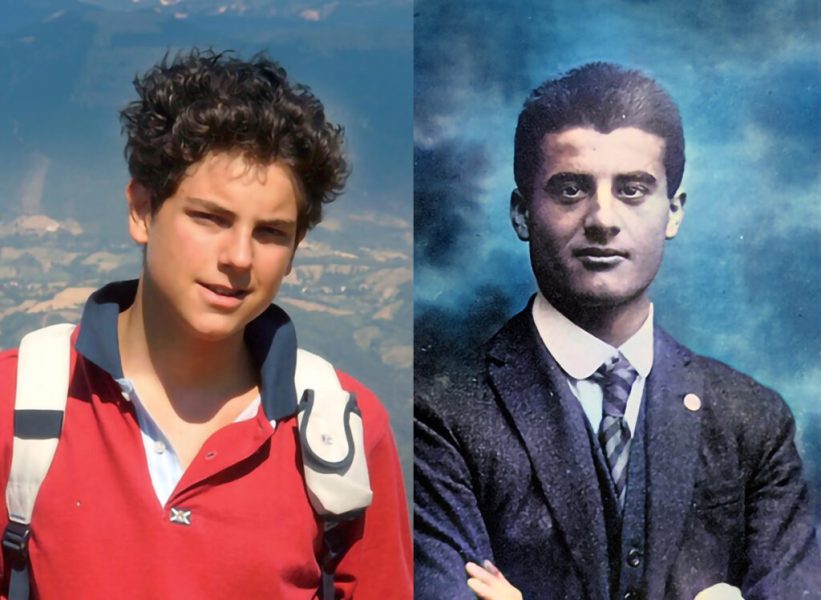
Popes pay special attention to the saints they canonize in Jubilee years. The joint canonization of Pier Giorgio Frassati and Carlo Acutis today constitutes one of the culminating moments of the 2025 Jubilee, and perhaps also one of the high points of Leo XIV’s pontificate.
For the 1900 Jubilee, Pope Leo XIII canonized two saints with notable popular devotion: St. John Baptist de La Salle and St. Rita of Cascia. Not all canonized saints enjoy widespread veneration; most are relatively unknown. In Holy Years, Popes seek to canonize popular saints.
The venerable Pius XII canonized St. Maria Goretti in 1950, whose devotion was so widespread that it was the first canonization celebrated outdoors in St. Peter’s Square, to accommodate hundreds of thousands of the faithful, including the mother of the new saint, who was 84 years old.
In 1975, St. Paul VI canonized Elizabeth Ann Seton and Oliver Plunkett, successor of St. Patrick. The latter, Archbishop of Armagh and Primate of All Ireland, was martyred in 1681 and was a even more prominent cleric than St. John Fisher. With his canonization, the glorification of the English Reformation martyrs was completed, to whom Paul VI gave special attention.
During the Extraordinary Jubilee of Mercy in 2016, Pope Francis canonized St. Teresa of Calcutta, an example from the 20th century of the works of mercy, and also St. José Sánchez del Río, the young martyr of the Cristero War in Mexico. He also canonized Elizabeth of the Trinity, a contemporary Carmelite of St. Thérèse. Hans Urs von Balthasar wrote about both in Two Sisters in the Spirit, where he used the beautiful image that saints are God’s prime numbers.
Popes Pius XI and St. John Paul II were those who most adorned the jubilee calendar with notable canonizations. Perhaps 2025 will be considered in the future as a Jubilee of similar splendor.
Pius XI concentrated several important ceremonies in the summer of 1925: St. Thérèse of the Child Jesus, St. Peter Canisius, St. John Mary Vianney and St. John Eudes, the last two canonized on the same day. He also beatified the North American Jesuit martyrs in June and the Korean martyrs in July. Saints of great renown who, moreover, attracted numerous pilgrims to Rome.
St. John Paul II prepared the Great Jubilee over decades, mentioning it already in the first paragraphs of his first encyclical in 1979. The canonization program was carefully crafted to mark the end of the totalitarian century: he canonized groups of martyrs from Mexico and China, the latter provoking strong protests from the Chinese communist regime, although the martyrs predated Mao’s revolution. These canonizations sought to highlight the “new martyrs” of the murderous regimes of the 20th century.
He traveled to Fatima—his only jubilee trip outside the Holy Land—to beatify the little shepherds Francisco and Jacinta Marto, and to reveal the “third secret,” part of the hidden history of the 20th century. At the center of it all, he proposed the message of Divine Mercy, “the ultimate limit to evil in the world,” with the canonization of St. Faustina Kowalska, “daughter of Poland” and “first saint of the third millennium.”
In addition, John Paul II canonized St. Katharine Drexel, an American pioneer in the education of racial minorities, and St. Josephine Bakhita, a former Sudanese slave who today enjoys great prominence as patroness against human trafficking.
Along with Frassati and Acutis, this October several will also be canonized, as is customary, including Ignatius Choukrallah Maloyan, Peter To Rot, Vincenza Mary Poloni, Maria of Mount Carmel Rendiles Martínez, Maria Troncatti, José Gregorio Hernández Cisneros, and Bartolo Longo. Some names stand out with particular force.
Peter To Rot, son of the first converts to Catholicism in Papua New Guinea, was a lay catechist. In places with a shortage of priests, catechists are key agents of evangelization and catechesis. He was martyred by the Japanese occupation forces in July 1945, imprisoned and killed for continuing his catechetical work and preaching against polygamy, a practice the Japanese were trying to reestablish. Defender of Christian marriage and religious freedom, Peter To Rot is more relevant today than ever and enjoys widespread devotion in the young Churches of Asia and Africa.
The 19th-century lay doctor, José Gregorio Hernández Cisneros, has profound popular devotion in Venezuela, where he is venerated even beyond practicing Catholics. Known as “the doctor of the poor” for providing medical care to the most needy, he was also a man of great learning, university professor, Franciscan tertiary, and animated by a living faith. He was very close to the sick during the great 1918 flu pandemic and died in 1919, ironically, run over by one of the few ambulances that existed at the time. Saint of faith and science, and symbol of the dignity of medicine in times of a culture of death, José Gregorio is a very timely saint for 2025.
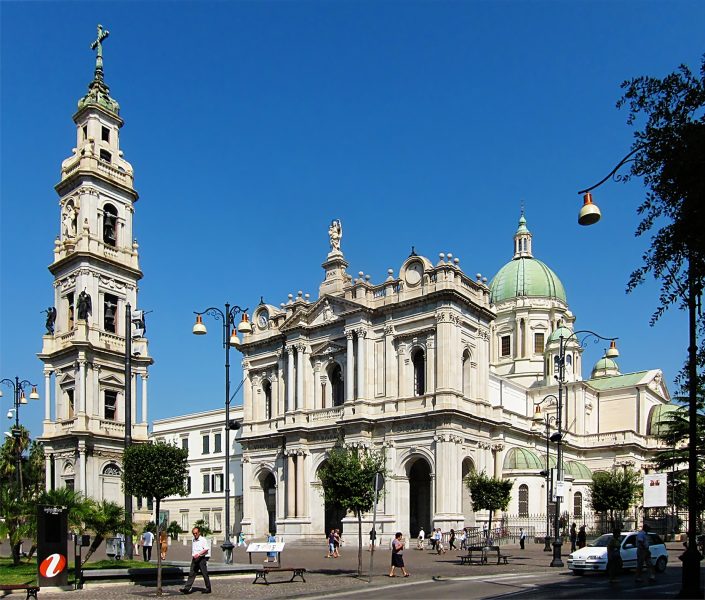
Bartolo Longo, son of a devout doctor, strayed from the faith upon entering the University of Naples. He did not just stray: he embraced Satanism and was “ordained” a satanic priest. This practice led him to a profound mental crisis, until he renounced it, returned to the Catholic faith, and became a Dominican tertiary in 1871. St. John Paul II called him “the apostle of the Rosary” at his beatification in 1980. Together with his wife, he promoted the construction of the current Basilica of Our Lady of the Most Holy Rosary of Pompeii. Pope Leo XIV will thus canonize the saint most associated with that shrine, after having invoked the Virgin of Pompeii in his first appearance on the loggia of St. Peter’s on May 8, 2025, her feast under that title.
Satanism and the occult are on the rise, a dark counterpoint to the encouraging Catholic news about the increase in adult converts and university apostolates. A convert from Satanism is more necessary today than in Bartolo Longo’s own time. And he is also a pilgrimage saint, spiritual father of the Pompeii shrine, in an era when pilgrimages attract both believers and non-believers (Santiago, Chartres).
Frassati and Acutis, young people with an accessible and attractive holiness, are the central names of the 2025 Jubilee, but the ensemble of jubilee saints promises to endure well in the memory of future generations, as happened with those of the jubilee a century ago.
About the author:
Fr. Raymond J. de Souza is a Canadian priest, Catholic commentator, and senior fellow at Cardus.