


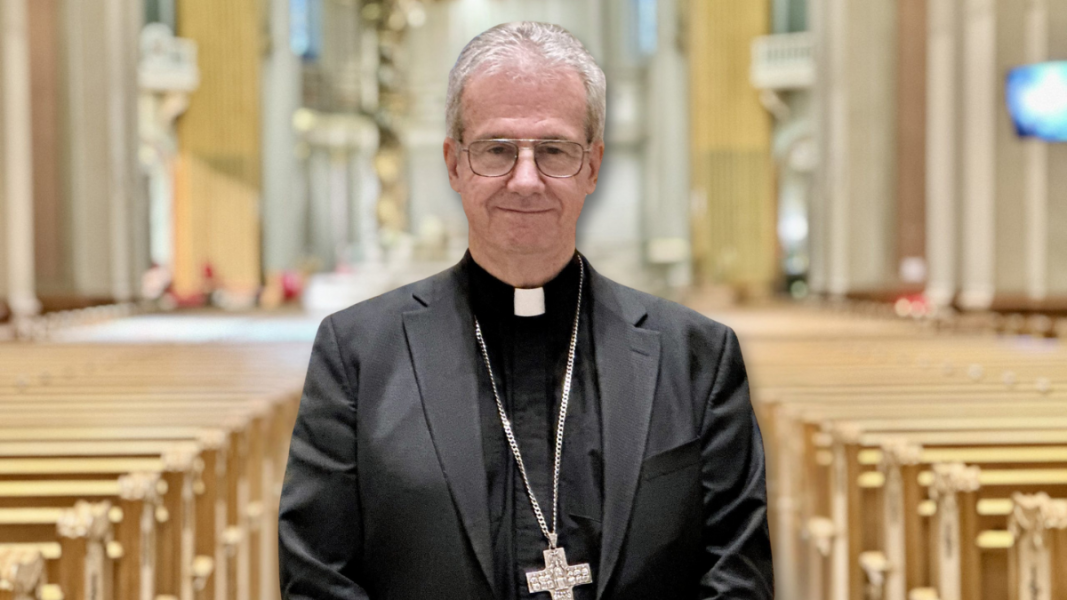
The Archbishop of Montreal, Christian Lépine, condemned the Quebec government’s proposal to ban prayer in public places, warning that it would amount to an attack on the most basic freedom of the human being. In a letter published on September 2 on the archdiocese’s website, as reported by LifeSiteNews, the prelate stated: “Prayer, in its simplest form, is an inner impulse. It is a thought turned toward God who is goodness, a presence in the world, a way of seeking peace.”
The archbishop denounced the political initiatives seeking to restrict public prayer as “raising serious concerns about respect for fundamental freedoms in a democratic society”.
The Quebec government’s plan
The provincial government announced in August that it intends to ban prayer in public spaces, following prayers performed by Muslim groups in streets and parks. Although the details of the legislation have not yet been published, the authorities have already indicated that they are willing to resort to the notwithstanding clause to shield the measure from possible judicial challenges.
In response to this proposal, Archbishop Lépine questioned the logic of the rule: “How can we distinguish a prayer from a moment of silence or contemplation? How can we legislate on an intention, a murmur, an inner thought? And above all, who would decide what is prayer and what is not?”.
A blow to Quebec’s Catholic tradition
Lépine also warned that the ban would put at risk the historic Catholic processions that have been part of Quebec’s cultural identity for centuries. Among them, he cited the March of Forgiveness, Corpus Christi, the Way of the Cross, the Palm Sunday procession, and the Peace March.
“These acts, which take place in an orderly and dignified manner, are places of encounter and dialogue. Banning public prayer would endanger their very existence,” he explained.
Neutrality is not neutralization
The archbishop recalled that a secular state must defend the values and beliefs of its citizens, and that neutrality cannot be confused with the public elimination of faith: “Confusing the neutrality of the state with the neutralization of society would lead to a serious regression”.
In a context marked by social, economic, and environmental crises, Lépine concluded with a forceful warning: “Does it benefit us to discourage actions that foster hope and solidarity? Ultimately, isn’t banning public prayer a bit like banning thought?”.