


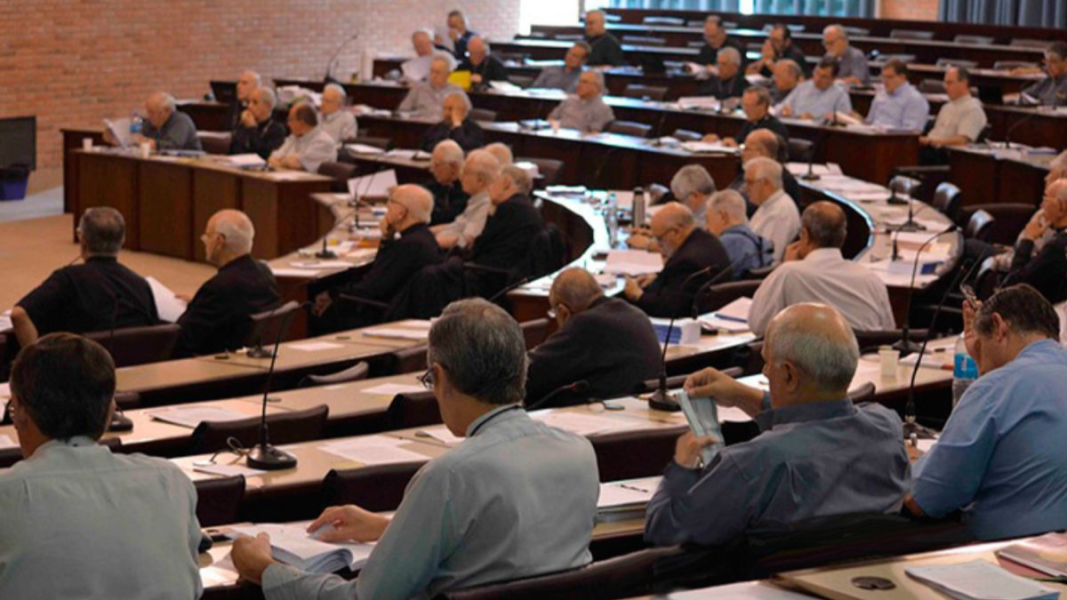
The Argentine episcopate has been going through a crisis of credibility and authority for years. This is not only about the loss of the Church’s social influence in a deeply secularized country, but also about an internal degradation caused by the way appointments were made during Pope Francis’s pontificate.
As the blog El Wanderer recently recalled, there were a multiplication of cases of dioceses with an excessive number of bishops—San Juan has three, while in La Plata there are more bishops than seminarians—as well as appointments of candidates without a solid track record in formation or pastoral governance, whose only apparent virtue seemed to be docility to the then Pontiff. This weakened the episcopal body and gave rise to a generation of pastors lacking independence and without true spiritual or intellectual weight.
León XIV and the Recovery of a Regular Procedure
In this context, the arrival of León XIV to the papal throne opens expectations of change. According to sources consulted by El Wanderer, the Pope would have conveyed to the nuncio in Buenos Aires his decision to restore the normal appointment process: the nunciature prepares the terna, with consultation from priests and the faithful, and Rome decides based on them.
The difference is crucial. For years, this procedure was ignored in practice, and decisions fell directly on the Pope’s judgment or that of his closest circle, disregarding the reports that guarantee the suitability of the candidates. If this shift is confirmed, the Argentine Church could begin to reverse a situation that many consider unsustainable.
A Problem that Transcends Argentina: the Case of Spain
The phenomenon was not limited to the Southern Cone. The same pattern was also recorded in Spain. The appointment of Father José Cobo as Archbishop of Madrid, and subsequently cardinal, was made outside the terna proposed by the nunciature, despite existing objections. Something similar happened in Barcelona. The contrast is that, in the first days of his pontificate, León XIV received the former nuncio in Madrid, mons. Bernardito Auza, whom Francis had marginalized, while Cardinals Cobo and Omella did not obtain an audience. For the columnist, this is a gesture that indicates the willingness to reorder processes and return to the episcopate a more solid profile.
The Signal of Fernández (Jujuy) in the Dicastery for the Clergy
The appointment of the Bishop of Jujuy, mons. César Daniel Fernández, as a member of the Dicastery for the Clergy, is interpreted as a significant signal. Fernández, ordained bishop by Benedict XVI, had been sidelined at the time by then-Cardinal Bergoglio from his role in seminary formation. However, in recent years he became a reference for a group of bishops reluctant to the drift of the episcopate. His incorporation into a key dicastery, responsible among other things for seminaries, indicates that León XIV does not fear relying on voices critical of the previous stage.
Rumors of Realignments in Rome and Buenos Aires
In the Vatican corridors, versions circulate about future changes that would affect high-ranking figures. The cardinal Mauro Gambetti, current archpriest of St. Peter’s Basilica, and the cardinal Víctor Manuel Fernández, known as “Tucho”, prefect of the Dicastery for the Doctrine of the Faith, who could be transferred to the see of Buenos Aires, are mentioned. In turn, the current Archbishop of Buenos Aires, mons. Jorge García Cuerva, would be moved to the Archdiocese of Salta.
If confirmed, it would be a shock effect: Fernández, a man of confidence of Francis, would return to Argentina; while García Cuerva, criticized by sectors of the clergy and the faithful, would be displaced to a less influential see. With this, León XIV would balance internal forces and decompress tensions in Rome.
An Open Future: Patience and Prayer
Beyond rumors and movements of pieces, what is at stake is the profile of the Argentine episcopate in the coming years. With dioceses overpopulated with auxiliary bishops and with scarce seminarians, the priority is to appoint suitable pastors, capable of guiding with doctrinal and spiritual firmness.
The blogger concludes that León XIV does not act foolishly, but with a prudence that may seem slow to some, but that guarantees better-founded decisions. Hence the final exhortation: it is a matter of having patience and, above all, of praying. Because no ecclesial reform, not even that of appointments, can be done without the assistance of the Holy Spirit.