


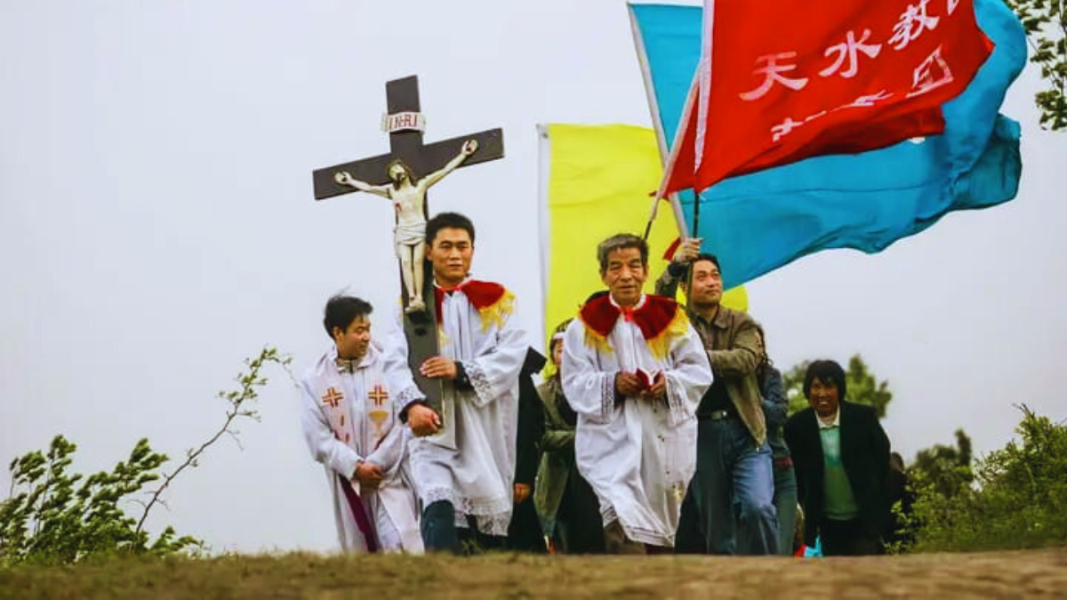
The Holy See, under the pontificate of Leo XIV, has taken an unprecedented decision in the history of the Church in China: the suppression of the dioceses of Xiwanzi and Xuanhua, erected by Pius XII in 1946, and the official recognition of the diocese of Zhangjiakou, created unilaterally by the communist regime in 1980. At the head of this new circumscription will be the priest Wang Zenghui, linked to the so-called “Official Church” controlled by the Chinese Communist Party.
A stronghold of Catholicism erased
Xiwanzi and Xuanhua were, for more than a century, strongholds of Catholicism in northern China, with a strong missionary tradition toward Mongolia. In 1946, Pope Pius XII erected both dioceses as part of a broad ecclesiastical organization in the country. Just a few months later, the Catholic community suffered the tragedy of the Xiwanzi massacre: priests executed, faithful arrested, and ecclesiastical properties confiscated. The persecution intensified with the arrival of the communist regime, which sent bishops and priests faithful to Rome to prison or labor camps, such as Melchior Zhang Kexing and Andrew Hao Jinli. During the Cultural Revolution (1966-1976), the repression reached its peak: temples destroyed, communities dispersed, and Catholic worship reduced to clandestinity.
The ecclesiastical geography imposed by the Party
In 1980, the Chinese government decided to unilaterally reorganize the ecclesiastical map and merged the dioceses of Xiwanzi and Xuanhua into a new state diocese: Zhangjiakou, which was never recognized by the Holy See. Since then, the region has lived in constant tension between the underground Church, faithful to the Pope, and the official Church, subordinate to the Chinese Catholic Patriotic Association (CCPA), an organization controlled by the Party to promote an “independent national church.” Bishops like Augustine Cui Tai have spent long years under house arrest and repeated detentions for remaining in communion with Rome.
A recognition that disfigures the memory
Rome’s recognition of the diocese of Zhangjiakou means validating the illegitimate territorial structure imposed by the Party in 1980. This legally erases the dioceses erected by Pius XII and invisibilizes the suffering of those who resisted at the cost of prisons, exiles, and destruction. The decision consolidates the power of the official Church controlled by the regime and demoralizes the underground Church, which for decades maintained communion with Rome under conditions of brutal repression.
A historic turn of submission
This is a historic turn that implies not only the acceptance of a bishop linked to the Communist Party, but also adherence to the ecclesiastical cartography designed by the regime. Rome, by submitting to the structure imposed by communism, renounces its own ecclesiastical geography and relegates to oblivion the testimony of fidelity and martyrdom that marked the communities of Hebei.